
Horned lark
Horned lark
Description
How to identify
The Horned lark (Eremophila alpestris) is a passerine bird belonging to the Alaudidae family. It is essential to clarify that this bird is not a plant pathogen, as it does not cause biological diseases in crops, but rather acts as a potential field pest due to its feeding habits.
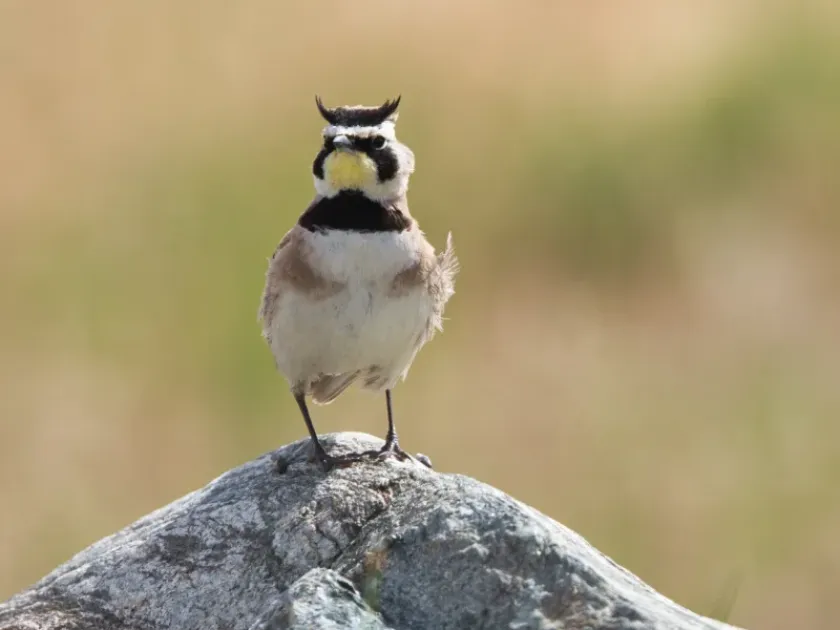
The species is named for the two black feather tufts on its head, which resemble horns. They are typically found in open fields, pastures, and agricultural lands with sparse vegetation.
Taxonomically, the bird is a member of the genus Eremophila. These birds have adapted to diverse environments, making them common inhabitants of agricultural areas throughout their range.
They are characterized by their ground-dwelling lifestyle, preferring open ground where they can easily spot seeds and small invertebrates.
The population distribution is wide, ranging from Arctic regions to the steppes, which means they are a regular feature in many global agricultural systems.
What it damages
The primary damage caused by the Horned lark in agriculture is the consumption of seeds immediately after planting, particularly in cereal crops like wheat, barley, and rye.
When seeds are not buried deep enough, birds can excavate them from the soil, leading to significant seed loss and reduced crop density across the field.
Beyond seed consumption, the birds may cause damage to young seedlings, especially at the emergence stage, which can result in uneven crop growth and reduced vigor.
The physical presence of large flocks can lead to soil compaction in specific areas, although this is usually localized and not considered a major agronomic issue.
As the plants grow and develop stronger root systems, the susceptibility to this type of bird damage decreases significantly.
When it appears
Horned larks are most active in agricultural fields during the spring planting season when seeds are easily accessible in the top layer of the soil.
In the autumn, they often visit post-harvest fields to forage on spilled grain, which is generally considered beneficial or neutral for field management.
Winter months may see large flocks congregating in sheltered areas near fields, where they look for remaining seeds or weed vegetation.
Migration periods in early spring can lead to sudden influxes of these birds, necessitating closer monitoring of recently planted areas by agricultural managers.
During the nesting season in summer, the birds become territorial and less inclined to gather in large flocks on open farmland.
Signs of infestation
Signs of Horned lark activity include small, shallow holes in the soil surface along the seeded rows, often accompanied by seed husks left behind after feeding.
Visual observations of flock activity during early morning hours, particularly in recently sown fields, are common indicators of potential damage.
Patches of sparse or missing plants in a uniform row indicate where birds have been actively feeding on the seeds prior to germination.
Presence of droppings in the affected areas helps confirm the duration and intensity of bird activity on specific portions of the field.
Distinguishing bird damage from soil-borne pathogens or insects is relatively straightforward, as birds leave behind distinct mechanical signs and lack the characteristic rot or lesions associated with fungal infections.
Control measures
The most effective strategy for managing the risk of seed loss is ensuring proper seed placement and depth during the planting process.
- Utilizing deterrent methods like visual scarecrows or reflective tapes.
- Employing auditory scaring devices in areas prone to high bird activity.
- Applying non-toxic seed coatings that impart a bitter taste to discourage foraging birds.
- Using post-seeding rolling to firm the soil surface and hide seeds from sight.
- Maintaining field hygiene by minimizing grain spills around the perimeter of the planting area.
Integrated management plans should focus on non-lethal deterrents, respecting the role of these birds in the broader ecological landscape.
Causes diseases · 1
Discussion
No discussions yet — be the first.