
Hexagonia hydnoides
Hexagonia hydnoides
Hexagonia hydnoides is a wood-decay fungus belonging to the kingdom Fungi, phylum Basidiomycota. It is a common saprotroph and occasional parasite found primarily in tropical and subtropical regions, colonizing hardwood species.
What the section contains
Hexagonia hydnoides
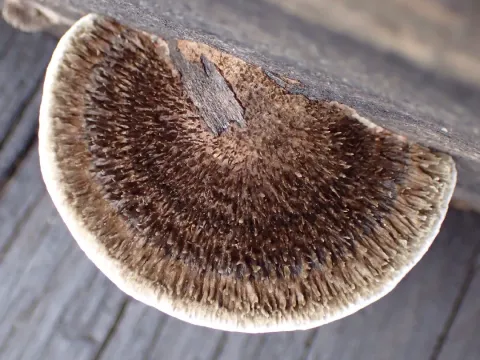
The fungus is identifiable by its dark brown to almost black fruiting bodies. The upper surface of the cap is covered in dense, coarse hairs, giving it a distinctive look that helps distinguish it from other polypore species.
The underside of the fruit body is characterized by large, visible pores arranged in a hexagonal pattern, which is the defining diagnostic feature for the genus Hexagonia.
Its internal texture is corky and rigid when fresh, becoming brittle as it dries. This structural composition allows the fungus to remain intact on the host tree for extended periods while producing spores.
The organism thrives in high-humidity environments, making it a frequent sight on decaying logs, stumps, and occasionally, severely stressed living hardwood trees.
The primary damage caused by Hexagonia hydnoides is white rot, a process where the fungus secretes enzymes that break down both lignin and cellulose, the structural components of wood.
This biological degradation leads to a significant loss of structural integrity in the tree's wood. As the decay progresses, the wood becomes soft, fibrous, and unable to support the mechanical load of the tree.
In forest stands, this leads to premature tree mortality and windthrow, which can have negative implications for wood timber yield and forest safety protocols.
While often categorized as a saprotroph, the fungus can behave as an opportunistic pathogen when it encounters trees that are already suffering from drought, mechanical injury, or other stressors.
The degradation of the heartwood and sapwood significantly lowers the wood quality, making it unsuitable for construction or high-grade timber production once the infection is established.
The most prominent sign of infection is the presence of the fungus's fruiting bodies on the trunk or large branches. These are usually seen as dark, hairy, shelf-like structures often growing in clusters.
Internal signs of decay appear as bleached, soft, and fibrous wood tissue. When examining an affected log or tree section, the white, stringy appearance of the degraded wood is a clear indicator of white rot.
The external health of the host tree may show signs of decline, such as thinning canopy, chlorosis of leaves, or stunted annual growth, resulting from the vascular system being compromised by the fungal invasion.
- Dark, coarse, hairy fruiting bodies on the bark;
- Distinct hexagonal pores on the underside of the caps;
- Fibrous, bleached white rot within the wood;
- Significant loss of tree stability and structural wood strength.
Monitoring for these symptoms is crucial in forest health assessments, especially when the fruiting bodies begin to appear, as this indicates a well-established colony within the host.
Control of Hexagonia hydnoides relies primarily on good forest management practices rather than chemical treatments, which are rarely effective against established internal decay.
Removing infected or dead trees from the area is essential to reduce the spore load and prevent further spread to healthy trees in the vicinity.
Protecting trees from mechanical wounds—such as damage from forestry equipment or recreational activities—is a vital preventive step, as these wounds provide easy access for spores.
In managed landscapes, applying protective wound dressings to necessary pruning cuts can prevent colonization. Keeping trees healthy through proper site maintenance and water management strengthens their natural defenses.
Maintaining a diverse forest ecosystem promotes competition among fungal species, which can help limit the dominance of aggressive wood-decay pathogens like Hexagonia hydnoides.