
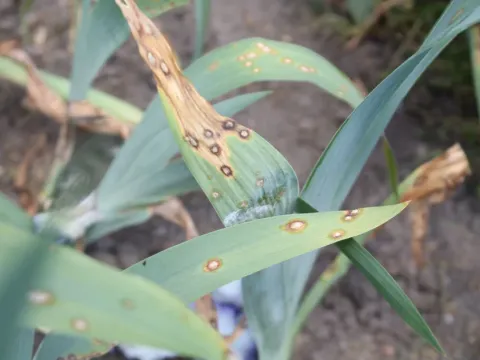
Heterosporium leaf spot of iris
Heterosporium minutulum
Heterosporium leaf spot of iris is a common fungal disease caused by the pathogen Heterosporium minutulum (syn. Mycosphaerella iris). It is an ascomycete fungus that specifically targets various iris species.
What the section contains
Heterosporium leaf spot of iris
The fungus overwinters in infected plant debris, soil, and old rhizomes. During spring, it produces spores that are spread by wind, rain, and splashing water onto healthy foliage.
This pathogen thrives in cool, humid environments. Once it lands on the leaf surface, it penetrates the epidermis and begins to colonize the host tissues, absorbing nutrients from the plant.
Laboratory diagnosis involves examining the characteristic olivaceous-colored fungal mats that erupt through the stomata. Microscopic analysis confirms the presence of the typical conidia of Heterosporium species.
The disease is highly contagious within iris beds, especially when plants are grown in overcrowded conditions that limit airflow and trap moisture around the leaves.
The primary damage caused by this fungus is the premature death of the foliage, which significantly reduces the photosynthetic area of the plant during the growing season.
As the leaves turn brown and wither, the plant loses its ability to synthesize energy and store it in the rhizomes. This leads to weakened plants, reduced flower production, and poor growth in subsequent years.
Severe infections can make the entire garden bed look scorched and neglected. Over time, chronic infestations may cause the rhizomes to decline and eventually lead to the death of the iris clumps.
Damage to the leaf tissue also makes the plant more susceptible to secondary opportunistic bacteria and other pathogens that exploit the weakened state of the iris.
In commercial cultivation, this disease poses a significant risk to the quality and marketability of iris rhizomes, necessitating intensive management and disease control protocols.
The disease cycle begins in early spring as temperatures rise to around 15–20°C (59–68°F), providing the necessary environment for conidia to germinate.
The peak season for the disease is typically mid-summer, especially during periods with frequent rainfall or heavy morning dew, which provides the water film necessary for infection.
Drier, hotter weather can inhibit the spread of the disease; however, the fungus can remain dormant within the plant tissues, waiting for more favorable moisture conditions.
Autumn marks the transition phase where the fungus prepares to survive the winter in the remnants of infected leaves that were not cleaned up from the soil.
Maintaining awareness throughout the entire vegetative season is crucial, as the fungus can complete multiple life cycles within a single year if conditions remain conducive.
The first symptoms appear as small, light brown spots on the tips of the leaves. As the infection progresses, these spots expand, often forming a dark brown or reddish-brown halo.
As the spots grow, the center often turns greyish, and the infected area begins to dry out. Eventually, the spots merge, leading to the collapse of large sections of the leaf.
During damp weather, the spots become covered with a velvety, olive-green to black fungal growth. This is the characteristic sporulation of Heterosporium minutulum.
Heavy infection causes the foliage to die back from the tips downwards, leaving the iris with a ragged, prematurely withered appearance by mid-summer.
- Small light brown spots on leaf tips.
- Velvety olive-black fungal growth.
- Leaf tips turn yellow and dry out.
- Merging of necrotic lesions.
- Overall loss of plant vigor.
The most effective management practice is sanitation. Gardeners must remove and destroy all infected foliage in the autumn, as this significantly reduces the inoculum level for the next season.
Ensuring proper spacing between iris plants is essential to promote good air circulation, which helps foliage dry quickly after rain and reduces the risk of infection.
Fungicidal treatments are highly effective if applied early. Copper-based fungicides or modern systemic products are recommended to stop the progression of the fungal growth.
When applying chemicals, ensure thorough coverage of both sides of the leaves. Regular scouting and repeating treatments at 10 to 14-day intervals during wet weather is advised.
Cultural care, such as watering at the base of the plant instead of overhead irrigation, and maintaining soil fertility, helps keep the irises strong and resilient against diseases.