
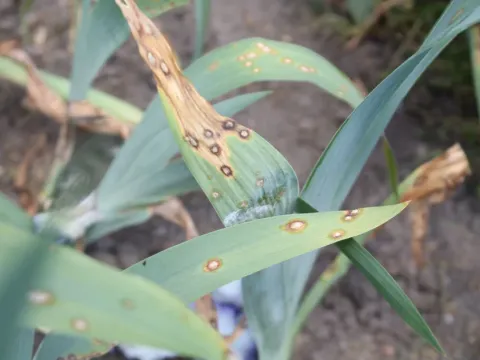
Heterosporium leaf spot of iris
Heterosporium maculatum
Heterosporium leaf spot is a fungal disease of iris caused by Heterosporium maculatum, often associated with the teleomorph Mycosphaerella macrospora. It is a specialized pathogen that primarily targets species of the Iris genus in garden environments.
What the section contains
Heterosporium leaf spot of iris
The fungus attacks the aerial parts of the iris, focusing on the leaves and sometimes the flowering stalks. This damage reduces the overall vigor of the plant and severely compromises its aesthetic appearance during the growing season.
Extensive defoliation caused by the pathogen inhibits photosynthesis, preventing the rhizome from storing sufficient energy for the next year. Weakened plants become more susceptible to frost damage and often fail to produce blooms in subsequent seasons.
The disease cycle begins with overwintering mycelium and conidia on infected plant debris left in the garden. In spring, as temperatures rise and humidity increases, the fungus begins to produce new spores that infect emerging healthy foliage.
Spread is favored by warm, humid weather and frequent rainfall. Water droplets on leaves act as a vehicle for spore germination and infection. The disease often reaches its peak later in the season as the foliage matures and becomes more susceptible.
Infection starts as small, circular or oval spots, initially light brown, which gradually expand and turn gray or dark brown with a distinct reddish-brown halo. The center of these spots often develops a fuzzy gray mold, indicating active sporulation.
- Gray or tan lesions on the tips of the leaves.
- Leaf tips curling and drying out due to necrotic tissue.
- Rapid coalescence of spots leading to total collapse of foliage.
Sanitation is the most effective management strategy. Gardeners must remove and destroy all infected foliage throughout the season and perform a thorough cleanup of dead plant debris in late autumn to eliminate sources of primary inoculum.
Cultural practices are essential to prevent the spread of the fungus. This includes spacing plants appropriately to ensure good air circulation, avoiding overhead irrigation that leaves water on the foliage, and planting irises in sunny, well-drained locations.
Chemical control involving fungicides is recommended if the disease becomes severe. Preventive spraying with copper-based products or systemic fungicides like those in the triazole or strobilurin classes can protect healthy foliage when applied at the first sign of symptoms.