
Heterosporium leaf spot of iris
Heterosporium tuberculans
Description
How to identify
Heterosporium leaf spot of iris, caused by the fungus Heterosporium tuberculans, is a common and destructive foliar disease. This pathogen belongs to the Ascomycota phylum and specifically targets various iris species, causing significant aesthetic and physical decline.
The fungus survives the winter season in diseased plant debris, including dead leaves and rhizomes. During the spring and summer, conidia are produced and spread by rain splashes, irrigation, and wind, landing on susceptible iris foliage.
Biological development of the disease is strictly dependent on moisture. High humidity and moderate temperatures provide ideal conditions for spore germination and the subsequent colonization of the leaf surface by fungal mycelium.
Laboratory diagnosis involves examining leaf tissue under a microscope, where the characteristic conidiophores and multi-celled, dark-colored spores are observed. These structures confirm the presence of Heterosporium tuberculans.
The fungus is highly contagious in dense plantings. Once a single plant is infected, the wind can carry spores to the entire flowerbed within a short period, especially if the canopy is closed and lacks air circulation.
What it damages
The disease primarily affects the leaves, leading to severe defoliation. In bearded irises, this is particularly detrimental as the leaves are essential for energy storage in the rhizomes for the following year's blooms.
Damage symptoms often start at the tips of the leaves and spread downwards. As the disease progresses, the photosynthetic capacity of the plant is drastically reduced, weakening the entire root system over time.
Chronic infections lead to stunted growth and reduced flower quality. Plants often fail to produce buds or produce smaller, deformed flowers if the foliage is heavily compromised by the fungus during the growing season.
Severely infected plants lose their ornamental value completely. The foliage turns brown and appears "scorched," which negatively affects the look of a garden, making it necessary to remove or treat the plants extensively.
In nursery production, this pathogen can cause economic losses by reducing the quality of the planting stock. Infected rhizomes may have poor establishment rates and increased susceptibility to other pathogens during the storage period.
Signs of infestation
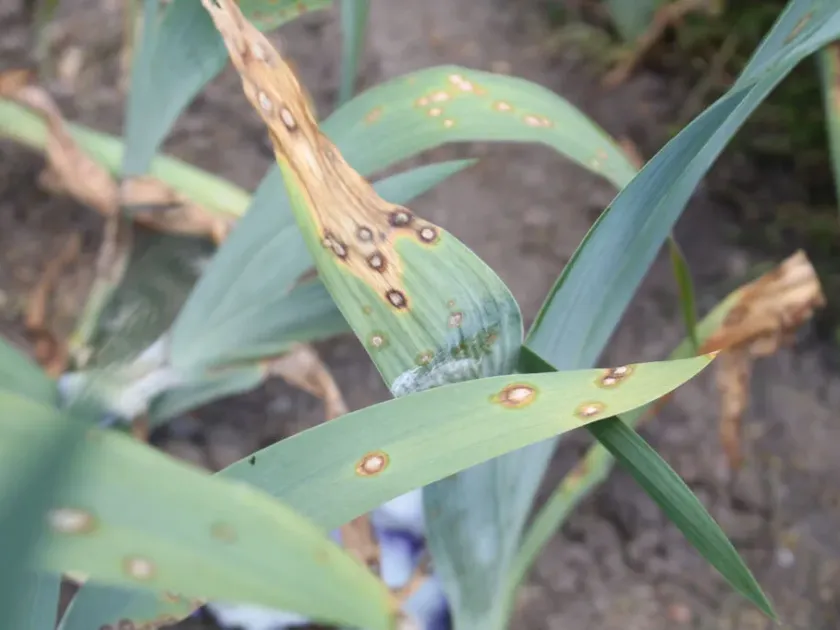
Symptoms initially appear as small, gray-brown spots on the leaf tips or margins. These spots are surrounded by a distinct dark-brown or reddish-brown halo, which is a hallmark of this infection.
As the lesion expands, the center often turns light grey, and tiny black clusters of spores become visible to the naked eye. These spots frequently merge, causing the leaf tissue to dry out and collapse.
The progression of the disease is usually upwards, starting from the oldest foliage near the base of the plant. In extreme cases, the entire leaf surface becomes covered with necrotic tissue, leading to premature death.
Unlike some bacterial diseases, the spots caused by Heterosporium are generally dry and brittle rather than soft or mushy. The distinction between healthy and diseased tissue is usually quite sharp at the edges of the spots.
Plants heavily affected in the middle of summer will look like they have been scorched by drought or fire, which often misleads gardeners. However, the presence of dark spores confirms the fungal nature of the issue.
Control measures
Management begins with strict sanitation. Removing and destroying all infected foliage at the end of the season is crucial, as this prevents the fungus from overwintering in the garden soil.
Cultural practices are highly effective: ensure proper plant spacing to improve airflow and reduce humidity levels around the foliage. Always aim for root-zone irrigation rather than overhead sprinkling to keep the leaves dry.
For chemical control, use copper-based fungicides or modern systemic products such as triazoles or strobilurins. Preventive sprays starting in late spring are more effective than curative actions once symptoms are widespread.
If an outbreak occurs, regular applications every two weeks during wet spells are necessary. It is important to rotate fungicide modes of action to prevent the development of resistant strains of the fungus.
- Thorough cleanup of plant debris in autumn.
- Avoid overcrowding to promote air circulation.
- Use of drip irrigation systems.
- Timely application of preventative fungicides.
Causes diseases · 1
Discussion
No discussions yet — be the first.