
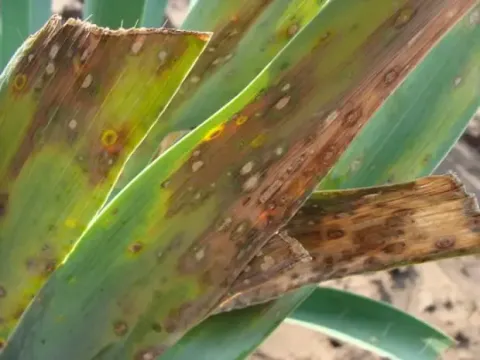
Heterosporium leaf spot of spinach
Heterosporium variabile
Heterosporium leaf spot is caused by the fungus Heterosporium variabile (often classified as Cladosporium variabile), which belongs to the phylum Ascomycota.
What the section contains
Heterosporium leaf spot of spinach
The fungus is a specialized pathogen that primarily targets spinach, causing significant damage in both field production and greenhouse cultivation.
The pathogen survives between seasons in infected plant debris or in the soil, utilizing its mycelium to remain dormant until favorable conditions arrive.
Conidia (spores) are produced in abundance during warm, humid weather and are easily disseminated by wind currents, rain splash, and human activity.
The biological cycle is rapid, especially when temperatures stay within the 15°C to 20°C range, allowing the fungus to produce multiple generations in one season.
The primary economic damage is caused to the leaves of the spinach plant, which are the edible part of the crop, rendering them unmarketable.
Severe infestations can lead to complete loss of the foliage, drastically reducing yield and causing significant financial losses for commercial growers.
In greenhouses, the disease can spread extremely quickly due to higher humidity levels and the lack of proper airflow if not managed correctly.
The quality of the greens is compromised, as the lesions create aesthetic damage and promote secondary infections by other saprophytic organisms.
While mature plants are often targeted, seedlings can also be severely stunted or killed if the environment is conducive to fungal growth.
Early symptoms appear as small, circular, or irregular light-colored spots that gradually increase in size as the infection advances.
The centers of these spots may eventually turn brown or necrotic, while the edges remain yellow, creating a distinct halo effect on the leaf.
On the underside of the leaves, a dark-olive to black velvety mold appears; this represents the active sporulation phase of the fungus.
As the disease progresses, these spots can coalesce, leading to large patches of dead tissue that cause the leaf to wither and curl.
Eventually, the entire leaf surface may become covered in lesions, leading to defoliation and a general chlorotic appearance of the plant.
Crop rotation is the most effective cultural practice, as it prevents the buildup of fungal inoculum in the soil over consecutive growing seasons.
Rigorous sanitation, including the removal and destruction of all infected plant residues, is essential to limit the spread of the pathogen.
Optimizing greenhouse management by improving ventilation and controlling irrigation helps to keep humidity low, effectively inhibiting spore germination.
Choosing resistant spinach varieties can significantly decrease the risk of severe infections and reduce the dependency on chemical control methods.
- Monitor crops regularly for early detection of lesions.
- Ensure proper spacing between plants to maximize airflow.
- Apply approved fungicides preventively if the weather forecast predicts high humidity.