
Heterosporium leaf spot of chamaerops
Heterosporium chamaeropis
Description
How to identify
Heterosporium leaf spot is caused by the fungus Heterosporium chamaeropis, a specialized pathogen that affects various species of the Arecaceae family, particularly the Mediterranean fan palm.
The fungus is classified among the Deuteromycetes and is characterized by the production of dark, multicellular conidia on branched conidiophores that emerge through the stomata of host leaves.
The pathogen colonizes leaf tissue intracellularly, leading to necrotic spots and interfering with the normal physiological functions of the palm leaf.
Identification is typically confirmed through laboratory microscopy, which reveals the characteristic brown, septate spores of the Heterosporium genus.
Understanding the life cycle of this pathogen is crucial for greenhouse management, as it survives on plant debris and spreads rapidly through airborne spores.
What it damages
The primary hosts include Chamaerops humilis and other related palm varieties, which suffer significant aesthetic and physiological degradation.
The lesions caused by the fungus diminish the photosynthetic area of the plant, leading to weakened growth and susceptibility to other environmental stressors.
In ornamental horticulture, the presence of these spots makes palms commercially unacceptable, resulting in financial losses for nurseries and growers.
If left unmanaged, the infection can spread throughout the entire canopy, causing extensive dieback of leaves and potentially killing younger, more vulnerable plants.
Secondary infections by saprophytic organisms often settle in the necrotic lesions, further accelerating the decomposition of the palm fronds.
When it appears
The disease development is heavily dependent on high relative humidity, which is essential for the germination of conidia on the leaf surface.
Outbreaks are most frequent in indoor environments or greenhouses with poor ventilation and stagnant air, where moisture persists on leaf surfaces for extended periods.
While the disease can be active throughout the year under favorable indoor conditions, it often spikes during cooler, damp months when ventilation is reduced.
Temperature plays a key role, with optimal fungal activity occurring between 18°C and 25°C, matching the climate requirements for most ornamental palms.
The movement of air, whether natural or forced, facilitates the spread of spores from infected leaves to healthy foliage throughout the greenhouse space.
Signs of infestation
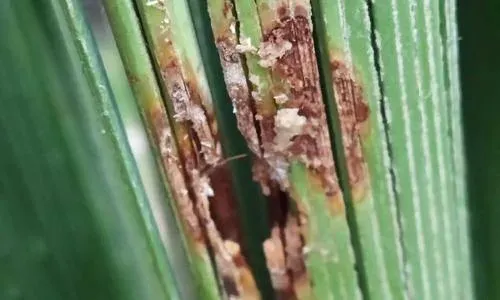
The earliest symptoms appear as tiny, dark-brown or black spots that expand slowly across the leaf surface, often displaying a chlorotic halo.
As the infection progresses, the spots merge, creating larger irregular necrotic areas that eventually turn grey or tan as the tissue dies.
The presence of a velvety, dark olive-green to black fungal sporulation layer on the underside of the spots is a definitive sign of Heterosporium activity.
In advanced stages, affected leaves become brittle, dry out, and may show signs of tearing or curling, especially at the tips and margins.
- Dark brown or black necrotic lesions on palm fronds.
- Velvety fungal growth (sporulation) within the lesion area.
- Yellowish or chlorotic rings around the necrotic spots.
- Premature yellowing and desiccation of older leaves.
Control measures
The first line of defense is strict sanitation: prune and destroy all infected foliage immediately to reduce the reservoir of inoculum in the area.
Modify the growing environment by reducing humidity and ensuring adequate air circulation to prevent moisture film formation on leaves.
Chemical control should involve regular applications of systemic fungicides, focusing on copper-based products or those containing active ingredients like chlorothalonil.
Implementing a strict quarantine for all new plant acquisitions is vital to ensure that the pathogen is not introduced into the existing collection.
Careful irrigation practices, such as watering at the base of the plant rather than overhead, significantly reduce the chances of spore germination and spread.
Causes diseases · 1
Discussion
No discussions yet — be the first.