
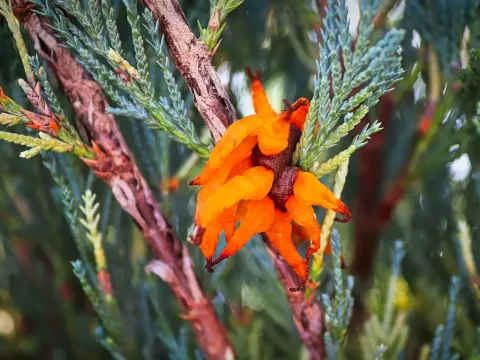
Gymnosporangium globosum
Gymnosporangium globosum
Gymnosporangium globosum is a fungal pathogen belonging to the Basidiomycota phylum. It is well-known for causing cedar-hawthorn rust, a complex disease that requires two distinct hosts to complete its life cycle.
What the section contains
Gymnosporangium globosum
The primary hosts for this fungus include various species within the Rosaceae family, specifically hawthorn, apple, crabapple, and mountain ash. The alternate host, which provides a wintering site for the fungus, is the juniper, particularly Juniperus virginiana.
The fungus is characterized by its formation of galls on juniper branches. These galls can remain inconspicuous for months until the spring, when they produce vibrant orange, jelly-like telial horns.
Biologically, it is an obligate parasite, meaning it can only survive by extracting nutrients from living host tissues. It produces different types of spores, including teliospores and aeciospores, which facilitate its dispersal and infection process.
Microscopic analysis reveals distinct septate teliospores, which are crucial for identifying this specific species among other rust fungi that affect coniferous and deciduous trees.
On deciduous hosts like hawthorn and apple, the fungus primarily attacks the leaves, leading to chlorosis, necrotic spotting, and significant premature leaf drop. This reduces the plant's ability to photosynthesize.
The loss of foliage directly impacts the tree's health, leading to stunted growth, reduced vigor, and lower fruit yields. In commercial orchards, this can cause significant economic losses due to decreased produce quality.
Affected young shoots and fruits may develop malformations. On fruits, the rust spots render the harvest unmarketable and susceptible to rot, making the crop unfit for commercial use.
On junipers, the pathogen causes structural damage. The formation of galls can restrict nutrient flow, causing dieback of twigs and branches. Heavy infections can weaken the entire juniper tree over several years.
In ornamental settings, the presence of the disease significantly detracts from the aesthetic value of the trees, leading to increased costs for maintenance and protective treatments.
The infection cycle begins in the spring when warm temperatures and high humidity trigger the eruption of gelatinous telial horns on juniper galls. These horns release basidiospores that are carried by the wind.
This spore dispersal phase typically coincides with the bud break and early leaf development of nearby hawthorns and apples. This is the period when primary infection occurs.
During the summer months, the fungus develops its aecial stage on the underside of deciduous leaves. The resulting aeciospores can be further spread by wind to other nearby hosts, potentially causing secondary infections.
As autumn approaches, the fungal mycelium retreats into the woody tissues of the juniper tree. It enters a dormant state, overwintering as mycelium inside the bark and branches.
The severity of the annual outbreak is largely determined by weather conditions during the spring. Wet, rainy weather significantly increases the efficiency of spore germination and overall infection rates.
The first signs on deciduous leaves are small, bright yellow spots. As the infection progresses, these spots expand into vibrant orange or rust-colored lesions, often with a darker center.
On the undersides of the leaves, the pathogen develops tiny, tubular structures known as aecia. These structures eventually split open to release spores, giving the underside a fuzzy appearance.
Juniper trees show characteristic rounded or irregular galls on their branches. These are the most reliable indicators of the disease, especially when they swell during moist spring conditions.
Infected fruits may display similar orange pustules, causing them to bulge and become deformed. Overall, severely affected trees may show thinning canopies and general signs of physiological stress.
Stunting is a common visual symptom on both hosts, as the fungus continuously siphons resources from the plants, preventing them from achieving their normal growth potential.
The most effective management strategy is the physical separation of the alternate hosts. Keeping junipers at a distance of at least 300-500 meters from susceptible Rosaceous plants can significantly reduce infection pressure.
Sanitation is key in home gardens and nurseries. This involves pruning and destroying any juniper branches that show signs of galls before the spores release in the spring.
Fungicidal applications, including copper-based products or systemic triazoles, are effective when applied to apple or hawthorn trees just as leaves are emerging, providing a protective barrier against spores.
Choosing rust-resistant cultivars of apple, crabapple, and juniper is the most sustainable long-term control method, minimizing the need for chemical intervention.
- Planting distance regulation.
- Pruning and destroying infected branches.
- Preventive fungicide schedules.
- Monitoring during peak spring humidity.
- Selecting resistant plant varieties.