
Gymnosporangium clavipes
Gymnosporangium clavipes
Description
How to identify
Gymnosporangium clavipes is a pathogenic fungus belonging to the order Pucciniales. It is known as a heteroecious rust fungus, meaning it requires two unrelated host species to complete its complex biological life cycle.
The fungus is classified within the family Pucciniaceae. It primarily cycles between juniper species and various members of the Rosaceae family, making it a significant concern for gardeners growing diverse plant species.
Microscopically, the fungus produces different types of spores, including teliospores, which form the distinctive orange structures on host plants during the spring season.
Understanding the taxonomic position of Gymnosporangium clavipes is essential for implementing precise agricultural practices aimed at interrupting its life cycle.
Visual identification in the field is typically facilitated by the presence of gall-like swellings and vibrant orange sporulation visible on the stems of junipers.
What it damages
The primary hosts for this pathogen include apple, pear, quince, hawthorn, and serviceberry trees. It severely impacts the quality and yield of these pomaceous fruits by causing foliage and fruit rot.
Juniper species serve as the primary overwintering host. The infection causes abnormal growths and stem deformations, which weaken the plant and serve as a constant source of inoculate for surrounding trees.
Damage on fruit trees manifests as leaf spots and fruit lesions, which significantly reduce the photosynthetic capacity of the plant and cause premature fruit drop.
Repeated yearly infections lead to the loss of vigor in infected trees, making them susceptible to secondary pests and environmental stressors such as frost or drought.
In commercial orchards, the economic impact is substantial due to the loss of marketable fruit and the recurring costs of fungicide applications.
When it appears
The infection cycle begins in early spring, triggered by moderate temperatures and sufficient moisture, which cause the telia on juniper branches to swell and release spores.
The basidiospores are wind-dispersed and land on susceptible pomaceous host plants, typically during the flowering window of the fruit trees.
Following penetration, the fungus develops internally, leading to symptoms within several weeks depending on environmental temperature and humidity levels.
During the summer and autumn, the fungus continues its development, eventually producing mycelium within the host tissue that remains dormant throughout the winter.
Periods of high rainfall in late spring provide the optimal conditions for spore release and rapid secondary infections across the garden landscape.
Signs of infestation
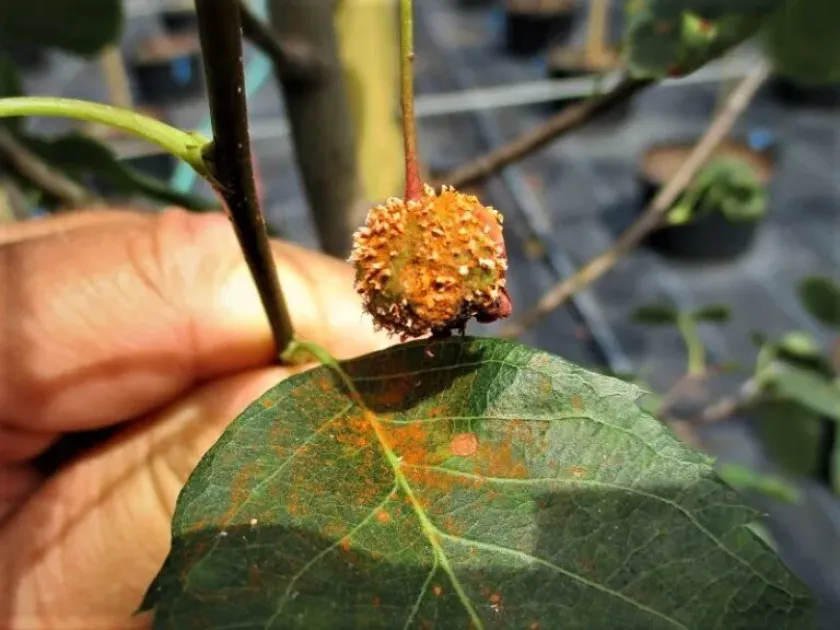
Symptoms on the foliage of fruit trees appear as bright yellow to orange spots, often developing a thickened, blister-like appearance on the underside of the leaves.
Fruit infection is characterized by dark, sunken lesions or irregular deformations, often accompanied by the emergence of white or orange fungal tubes.
On junipers, the most prominent sign is the development of orange, gelatinous horns emerging from bark swellings or galls during rainy conditions.
Infected twigs may show significant distortion, bark cracking, and localized necrosis, eventually leading to the death of affected branches.
- Bright orange spots on fruit tree leaves.
- Gelatinous orange masses on juniper stems.
- Deformed fruits with necrotic areas.
- Premature defoliation of infected trees.
Control measures
The most effective cultural management strategy is to maintain a physical distance of at least 500 meters between juniper host plants and orchard trees to break the cycle.
Sanitation is critical; pruning and destroying galled branches of juniper trees before the spring rains is essential to reduce the local spore population.
Preventative fungicide applications on pomaceous trees during the bloom period can significantly reduce the severity of fruit and leaf infections.
Improving orchard management practices, such as proper pruning for airflow and adequate fertilization, helps trees remain resilient against pathogen attacks.
Regular scouting and removal of symptomatic fruit are recommended for small-scale garden operations to minimize the spread of the fungus within the season.
Causes diseases · 1
Discussion
No discussions yet — be the first.