
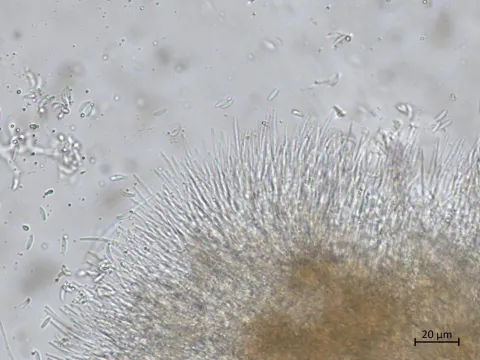
Hainesia lythri
Hainesia lythri
Hainesia lythri is an anamorphic fungus belonging to the order Helotiales. It is a recognized plant pathogen responsible for various diseases, commonly manifesting as leaf spots and fruit rots in several horticultural crops.
What the section contains
Hainesia lythri
Taxonomically, the fungus is part of the phylum Ascomycota. Its sexual stage, known as Discohainesia oenotherae, is also found in nature, contributing to the genetic diversity and evolutionary adaptation of the pathogen.
The fungus is highly resilient, capable of surviving in soil debris and on diverse plant hosts. Its ability to remain latent in plant tissues makes it a challenging pathogen to manage in commercial agriculture.
Identification is primarily achieved through the observation of acervuli, the reproductive structures where conidia are produced. These microscopic spores are the primary agents of dispersal within agricultural settings.
The pathogen is widespread in temperate climates. Its biological success is attributed to its high spore production rate and the ability to infect multiple parts of the host plant, including foliage and fruit.
Strawberry (Fragaria × ananassa) is one of the most susceptible crops to Hainesia lythri. The pathogen causes significant damage to the leaf canopy, leading to reduced photosynthetic capacity and plant vigor.
Fruit rot is the most economically devastating symptom. Infected berries become soft and necrotic, losing all commercial value. These rotting fruits also serve as major sources for the secondary spread of the infection within the field.
Beyond berries, the fungus can infect leaf petioles and stolons, weakening the plant's overall architecture and ability to produce runners for propagation. This significantly impacts nursery operations and yield potential.
The pathogen's impact is compounded by its ability to persist in the field, creating a cycle of infection that can last for several seasons if not addressed through proper sanitation and intervention measures.
Early defoliation caused by the fungus prevents the plant from storing sufficient carbohydrates for overwintering, often leading to reduced crop yields in the following season due to weakened plant crown health.
The infection cycle typically begins in the spring as temperatures rise, usually exceeding 12-15°C. Fungi overwintering in plant debris or soil initiate the first primary infections on newly emerged leaves.
High relative humidity and frequent rainfall are the most critical environmental factors for disease development. Splash dispersal by rain droplets effectively spreads conidia from the soil to the leaves and developing fruits.
Throughout the summer, multiple cycles of infection occur. As long as environmental conditions remain favorable (warm and humid), the pathogen continues to produce spores and expand its area of colonization.
The period of fruit maturation is the most vulnerable time for crop loss. Heavy moisture or morning dews during this stage often trigger rapid outbreaks of fruit rot that can destroy significant portions of the yield.
As autumn approaches and temperatures drop, the fungus enters a state of dormancy, focusing its energy on overwintering within necrotic plant residues, ready to re-emerge in the next season.
Symptoms on leaves typically appear as circular to irregular necrotic spots. These spots may be brown, purple, or dark in color, often surrounded by a distinct darker margin.
A key diagnostic feature is the formation of small, erumpent acervuli in the center of the leaf spots. These may appear as tiny pinkish or yellowish droplets, which are masses of conidial spores.
Infected fruits show depressed spots that enlarge rapidly. The affected tissue becomes soft, watery, and eventually decays. The surface of these decaying fruits may eventually show signs of sporulation.
Severe infestations cause leaves to wither, curl, and drop prematurely. The plant often exhibits a general stunted appearance, and the number of marketable berries is substantially reduced.
Because these symptoms can resemble other fungal leaf spots, laboratory diagnosis, including isolation and culture analysis, is often necessary to confirm Hainesia lythri specifically.
Effective management starts with strict sanitary practices. Removing and destroying all infected plant materials at the end of the season is essential to break the infection cycle.
Crop rotation and proper planting spacing are fundamental strategies to minimize humidity and allow for good airflow, which helps keep foliage dry and hinders fungal germination.
- Always procure certified, disease-free nursery plants to prevent initial field colonization.
- Apply fungicides preventively during high-risk periods, especially during flowering and fruit development.
- Use straw or plastic mulch to provide a physical barrier between the fruits and the soil, reducing splash-borne infections.
- Implement balanced fertilization programs to enhance host plant resistance against infection.
Chemical control should rely on a rotation of different fungicide classes to prevent the development of resistance. Monitoring local weather patterns is crucial to timing these interventions effectively.
In cases of severe field-wide infection, aggressive culling and removal of heavily symptomatic plants are necessary to stabilize the field and protect the remaining crop from excessive spore load.