
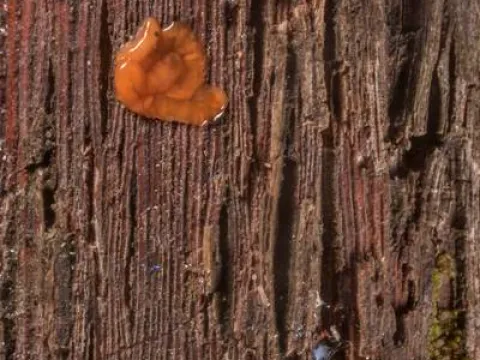
Gibberella baccata
Gibberella baccata
Gibberella baccata is an ascomycete fungus belonging to the Nectriaceae family. It is a well-known plant pathogen, often referred to in its anamorphic form as Fusarium lateritium.
What the section contains
Gibberella baccata
Taxonomically, it is classified under the kingdom Fungi, division Ascomycota, class Sordariomycetes, and order Hypocreales. This fungus exhibits both parasitic and saprotrophic life strategies.
The fungus develops mycelium within the plant tissues, colonizing the vascular system and interfering with the transport of water and nutrients. Its ability to produce both sexual and asexual spores ensures its survival.
Identification in the laboratory involves culturing on specific media. The colonies typically exhibit creamy to reddish-pink pigmentation, a common feature for many Fusarium-like species.
Microscopic examination reveals characteristic macroconidia: they are sickle-shaped, multi-celled, and often have a distinct apical cell, which serves as a primary diagnostic feature.
This pathogen impacts a wide range of agricultural crops, including cereals, legumes, fruit trees, grapevines, and various vegetables. It is particularly damaging to woody perennials.
The damage is characterized by necrosis, bark cankers, and systemic wilting of branches. In severe cases, the fungus causes dieback of entire plants, especially in nursery settings.
In cereal crops, it contributes to Fusarium head blight, resulting in shriveled kernels, poor germination rates, and the accumulation of mycotoxins that contaminate the final harvest.
In nurseries, Gibberella baccata can cause significant losses by infecting young seedlings, often entering through wounds or pruning cuts and causing rapid tissue decay.
The overall impact includes reduced yield, poor quality of produce, lowered plant vigor, and increased sensitivity of the host to other environmental stresses and diseases.
The lifecycle includes both an active parasitic phase during the growing season and a dormancy phase, where the fungus survives in plant debris or soil as mycelium and perithecia.
Infection sources include soil, infected branches, and leaf litter. Conidia are disseminated by wind, water splashes, insects, and contaminated farm equipment or pruning tools.
High humidity and moderate temperatures between +15 and +25 degrees Celsius are optimal for the fungus. Rainy weather during the growing season promotes rapid disease spread.
Primary infection in the early season typically originates from spores produced on overwintering residues. These spores infect young shoots through micro-lesions or pruning wounds.
Throughout the summer, multiple generations of asexual spores are produced, allowing the pathogen to spread across the field or orchard rapidly whenever moisture levels remain high.
The first symptoms are often small spots or bark lesions that expand over time. Eventually, these lesions can girdle branches, leading to the death of the distal parts.
During humid conditions, small, reddish-brown to black fruiting bodies known as perithecia can be observed forming on the surface of the infected bark or necrotic tissue.
Leaves on infected branches may yellow, curl, and wilt. While they may remain attached for some time, the branch eventually dries out and dies as the vascular flow is blocked.
Gummosis (the oozing of sap) is frequently observed in woody plants as a defense mechanism or a reaction to the pathogen's presence within the vascular tissues.
- Wilt and death of individual branches or shoots.
- Formation of cankers and cracks on the bark.
- Presence of small dark fungal fruiting bodies on dead tissue.
- Premature yellowing and leaf senescence.
Sanitation is the most effective management strategy: prune and destroy all infected plant material, ensuring that tools are disinfected between cuts to prevent spread.
Adopting sound horticultural practices, such as proper spacing and thinning, improves airflow and lowers canopy humidity, creating a less favorable environment for fungal growth.
Selecting healthy, certified nursery stock is critical to prevent introducing the pathogen into clean areas, as the fungus is often moved via infected transplants.
Chemical control involves the timely application of fungicides, such as benzimidazoles, triazoles, or strobilurins, especially following extreme weather events like hail.
Maintaining optimal plant nutrition, particularly ensuring sufficient potassium levels, helps improve cell wall integrity and boosts the plant's natural resistance to fungal colonization.