
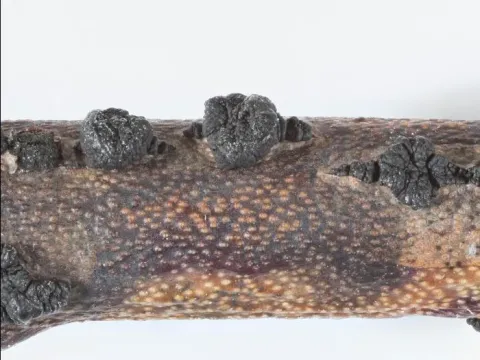
Gibbera vacciniicola
Gibbera vacciniicola
Gibbera vacciniicola is a specialized fungal pathogen belonging to the Kingdom Fungi and the Phylum Ascomycota. It acts as the causal agent for specific leaf spots and necrosis found in members of the Ericaceae family.
What the section contains
Gibbera vacciniicola
This microorganism follows a parasitic lifestyle, specifically targeting the tissues of evergreen plants. Throughout its life cycle, it develops reproductive structures known as pseudothecia within infected host tissues, which ensures the fungus successfully survives the winter season.
Systematically, this pathogen is closely linked to a complex of micromycetes that affect wild berry crops in forest communities. It is characterized by high adaptability to temperate climate conditions and the ability to maintain viability during dormant periods.
The reproduction of the fungus occurs via spores, which are disseminated by air currents or water droplets, facilitating the primary infection of young shoots and leaves at the onset of the growing season.
Identification of this pathogen is often challenging because its external symptoms may mimic other fungal leaf spots; therefore, definitive diagnosis requires laboratory analysis of the mycelium and spore-bearing structures.
The primary host for this pathogen is the lingonberry (Vaccinium vitis-idaea). The fungus infects both wild populations and commercial plantations, causing significant losses in berry yields.
The pathogen primarily attacks the foliage, causing necrotic lesions to develop. In cases of severe infection, premature leaf drop occurs, which critically weakens the plant and reduces its photosynthetic capacity.
In addition to the leaves, the infection can affect young shoots. Stem damage often leads to terminal bud deformation, stunted growth, and in severe cases, the necrosis and death of individual branches.
The harmfulness of the fungus lies not only in the destruction of plant tissues but also in the general depletion of the plant's resources. Infected plants become highly susceptible to low winter temperatures and secondary infections.
Under commercial conditions, the infection spreads rapidly, creating large "blight" patches which, if left unchecked, can lead to a loss of commercial berry quality and the total destruction of the planting area.
In the early stages of infection, small, diffuse spots appear on the upper side of the leaves, typically tan or dark brown in color. Over time, these spots expand in size and may coalesce to cover larger areas.
A distinctive sign is the appearance of tiny black dots — the fungal pseudothecia — on the necrotic surface. These structures protrude above the leaf surface and serve as the primary visual marker for species diagnosis.
Tissues within the infected areas eventually dry out and become brittle. Often, a darker border forms around the edge of the spots, giving the leaf a characteristic mottled or mosaic appearance.
On young shoots, signs of the disease manifest as darkened patches that can girdle the stem. This disruption causes restricted nutrient flow and the subsequent wilting of the parts above the lesion.
During periods of high humidity, light sporulation may occur on the infected sites, appearing as a faint dark coating; this indicates that the fungal mycelium is actively colonizing the plant tissues.
Cultural practices form the foundation of management. It is essential to maintain spatial isolation between plantations and regularly perform sanitary pruning to remove infected plant parts immediately from the field.
Gathering and destroying fallen leaves in the autumn significantly reduces the primary inoculum level. Since spores overwinter in plant debris, cleaning the site is the most effective preventative measure for spring.
Chemical control involves the use of broad-spectrum fungicides, such as copper-based or specific organic compounds. Applications should be performed preventatively during bud break and early leaf development.
Maintaining proper plant density is crucial. Adequate ventilation within the plantation lowers humidity in the canopy, creating an environment that is less favorable for spore germination and fungal growth.
As part of an integrated pest management strategy, monitoring surveys in mid-summer are recommended. If initial signs are detected, irrigation management must be adjusted to avoid overhead watering, which promotes spore dispersal.