
Gibberella avenacea
Gibberella avenacea
Gibberella avenacea (teleomorph state) is a fungal pathogen belonging to the order Hypocreales. Its anamorph, commonly known as Fusarium avenaceum, is widely recognized as a serious threat to agriculture globally.
What the section contains
Gibberella avenacea
This fungus is characterized by the production of macroconidia and microconidia in its asexual stage, which are the primary means of dispersal. The sexual stage (perithecia) forms on dead plant material, contributing to the survival of the pathogen between seasons.
The organism is a soil-borne and residue-borne pathogen. It can colonize a diverse range of substrates, allowing it to persist in agricultural fields even in the absence of a primary host crop for several years.
Identification in the field is often challenging due to the similarity of symptoms with other Fusarium species. Precise identification typically requires laboratory isolation, where the fungus shows specific cultural characteristics and spore morphology.
The fungus is highly resilient, capable of surviving in various environments through the formation of robust structures like chlamydospores, which allow it to withstand cold winters and dry conditions.
The pathogen primarily attacks small grain cereals, including wheat, barley, rye, and oats, causing significant damage by triggering Fusarium head blight (FHB) and root rots. These diseases drastically reduce grain yield and quality.
Beyond cereals, G. avenacea is a well-known cause of dry rot in potato tubers, which leads to major post-harvest losses. Infected tubers often become soft and develop internal decay during storage.
In seedlings, the pathogen induces pre- and post-emergence damping-off, leading to sparse plant populations in the field. This necessitates re-seeding and causes substantial economic losses for farmers.
The presence of this fungus significantly degrades the end-use quality of the harvested grain, making it unsuitable for human consumption due to the contamination with mycotoxins like moniliformin.
Systemic colonization of the plant tissue interferes with nutrient and water transport, resulting in shriveled kernels, poor plant development, and eventually, the death of the infected plant parts.
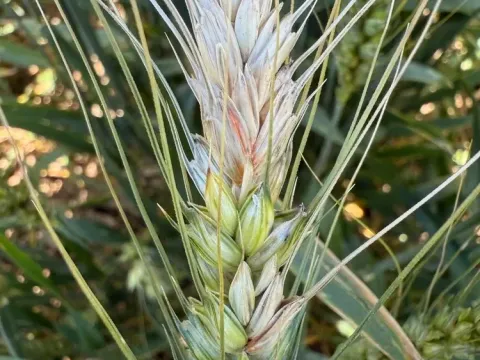
A hallmark of Fusarium head blight is the premature bleaching of spikes or parts of the spike. In humid conditions, a characteristic orange or pinkish mold growth can be observed on the affected spikelets.
Root and crown infections manifest as brown lesions on the base of the stem. These plants may appear stunted, chlorotic, or show signs of premature wilting, especially during hot and dry spells.
Infected seeds or potato tubers often display necrotic areas or lesions. Surface discolorations, such as reddish or brownish patches, are common indicators that the internal tissues have been colonized by the mycelium.
During moist conditions, tiny dark, spherical fruiting bodies (perithecia) may emerge on the surface of stubble or debris, signifying the active sexual cycle of the fungus in the field environment.
In fields, the symptoms often appear in patches where local microclimate conditions or high initial inoculum levels have favored the establishment and spread of the disease.
The foundation of effective control is the use of high-quality, fungicide-treated seeds. This practice significantly reduces the risk of seed-borne infection and improves seedling emergence rates.
Crop rotation remains the most critical cultural practice. Avoiding the cultivation of cereals after cereals, or after susceptible crops like corn, minimizes the build-up of the pathogen in the soil.
Proper residue management, including deep plowing and accelerating the decomposition of plant debris, reduces the surface inoculum density and breaks the cycle of the disease.
Choosing resistant or tolerant crop varieties is a strategic approach. While complete immunity is rare, genetic resistance can help plants better withstand infection and limit the spread within the crop canopy.
Foliar fungicide application during the flowering stage is essential for preventing head blight. Timing is critical, as protecting the spike from spore infection during anthesis is necessary to achieve effective results.