
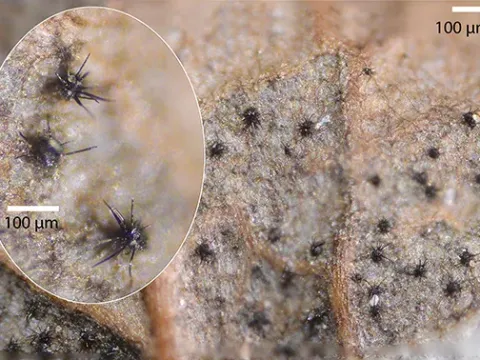
Gibbera myrtilli
Gibbera myrtilli
Gibbera myrtilli is a species of ascomycetous fungus known to be a specialized plant pathogen. It primarily targets plants within the Ericaceae family, most notably blueberries and related species.
What the section contains
Gibbera myrtilli
Taxonomically, it belongs to the order Venturiales. This fungus produces specialized fruiting bodies, known as pseudothecia, which serve as overwintering structures embedded within the necrotic leaf tissue of the host plant.
The life cycle of the pathogen is closely synchronized with the growth of the blueberry plant. As temperatures rise in spring, sexual spores (ascospores) are released from overwintering structures and dispersed via wind and splashing rain.
Once settled on a host, the fungus initiates infection through direct penetration of the cuticle. The mycelium colonizes the intercellular spaces of the leaf tissue, gradually extracting nutrients and leading to cellular death.
In addition to sexual spores, the fungus can produce conidia during the growing season. This secondary inoculum facilitates rapid spread throughout the canopy, especially during periods of high humidity and rainfall.
The primary host is the wild bilberry (Vaccinium myrtillus), but the pathogen is frequently observed affecting cultivated highbush blueberry varieties. Severe infections lead to a significant reduction in photosynthetic capacity.
Damage is characterized by premature defoliation, which severely limits the plant's ability to store carbohydrates. This exhaustion translates into reduced fruit yield and poorer berry quality in the current and following season.
Repeated annual infections weaken the vigor of the blueberry bush, making it more susceptible to environmental stressors such as drought and extreme cold. Over time, this leads to a gradual decline of the entire plantation.
The fungus can also affect young shoots, causing necrosis that limits the development of new growth. This restriction on canopy development further reduces the overall plant health and resilience.
Economic losses are cumulative, particularly in commercial operations where persistent infection cycles can result in diminished fruit size and lower marketability of the produce.
The most visible sign of Gibbera myrtilli is the appearance of small, circular spots on the leaves. These spots typically start as brown or dark red discolorations, often encircled by a pale or yellowish halo.
As the infection advances, the centers of these lesions may darken as the fungus begins its reproductive phase. A velvety, dark-colored mold often appears on the underside of the leaves, corresponding to areas of heavy spore production.
Severely infected leaves eventually wither, roll up, and drop from the plant before the end of the growing season. This premature leaf drop is a classic indicator of high disease pressure within the patch.
Small black dots, which are the visible fruiting bodies (pseudothecia), may develop on dead leaves or stems. These are crucial for the long-term survival of the fungus and should be removed during sanitation.
- Circular brown leaf lesions with light halos.
- Velvety dark mold on the undersides of leaves.
- Early leaf abscission during summer months.
- Necrotic patches and curling on young, tender shoots.
Cultural control is the most effective approach for managing this pathogen. The most critical step is the thorough removal and destruction of fallen leaves and infected debris, as these serve as the primary reservoir for the fungus.
Plant spacing should be optimized to promote airflow within the bushes. Good ventilation keeps the leaf surfaces dry for longer periods, which significantly inhibits the germination of fungal spores.
In cases of severe infestation, the application of fungicides may be necessary. Preventive sprays, especially early in the season before bud break, can help suppress the primary infection cycle.
Maintaining optimal soil health and proper nutrient balance, particularly avoiding excessive nitrogen which can encourage overly lush and susceptible foliage, is essential for natural disease resistance.
Monitoring the field during the flowering period is vital. By identifying early infection symptoms, growers can take immediate corrective actions, such as localized pruning or targeted applications, to prevent widespread disease.