
Hop stunt viroid
European stone
Hop stunt viroid (HSVd) is a plant pathogen belonging to the genus Hostuviroid. It consists of a small, circular, single-stranded RNA molecule without a protein coat.
What the section contains
Hop stunt viroid
This pathogen does not encode any proteins, relying entirely on the host's cellular machinery to replicate its genetic material within plant cells.
It is primarily transmitted through mechanical contact, such as contaminated pruning tools, machinery, or agricultural practices that wound the plant tissue.
The viroid is highly persistent and can survive for long periods within the systemic tissues of infected perennial host plants, facilitating its spread via cuttings.
Molecular detection using RT-PCR is the gold standard for identifying HSVd, as symptoms can often be mistaken for nutritional deficiencies or common viral infections.
While named after the hop plant (Humulus lupulus), HSVd has a wide host range, including citrus, grapevines, peaches, plums, and various cucurbits.
In hops, it causes a significant reduction in cone yield and a marked decline in the quality of brewing resins, specifically alpha-acid content.
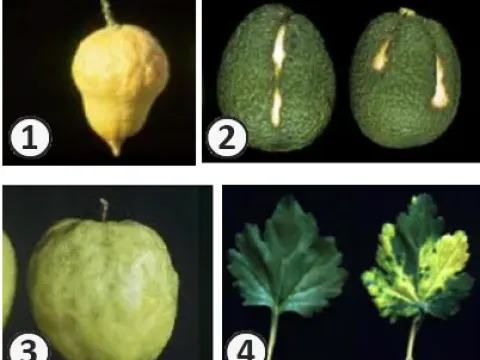
Citrus orchards are severely affected by this viroid, which induces dwarfing, reduces fruit size, and drastically shortens the productive lifespan of the trees.
Grapevines suffer from stunted growth, poor vigor, and erratic fruit set, which significantly impacts wine quality and overall vineyard productivity.
Economic losses are compounded by the fact that infected plants remain asymptomatic reservoirs, continuing to infect surrounding healthy plants throughout the season.
The most distinctive sign in hops is the extreme shortening of internodes, resulting in a stunted, dwarfed plant structure compared to healthy individuals.
Leaves on infected plants may show signs of yellowing (chlorosis), crinkling, or general mosaic-like patterns that inhibit effective photosynthetic activity.
Affected plants often develop an excessive number of thin, weak lateral branches, giving the plant a bushy appearance that lacks the typical vigorous climbing habit.
In other crops like cucumbers, the infection causes a dramatic reduction in plant size, leading to stunted, malformed fruit that is commercially worthless.
- Severe growth retardation.
- Deformed, chlorotic foliage.
- Reduced flower and fruit development.
The most effective strategy is the exclusive use of certified pathogen-free planting material, often produced through meristem culture techniques.
Strict sanitation protocols must be enforced, including the thorough disinfection of pruning tools and equipment between rows or individual plant groups.
Regular inspection and testing of planting stock are crucial to ensure that any infected individuals are detected and removed before they can spread the pathogen.
Since there are no chemical pesticides to treat infected plants, roguing (removing) infected bushes is mandatory to maintain the health of the remaining stand.
Farmers should implement biosecurity measures to prevent the introduction of the pathogen into new, clean fields by controlling the movement of potentially infected nursery stock.