
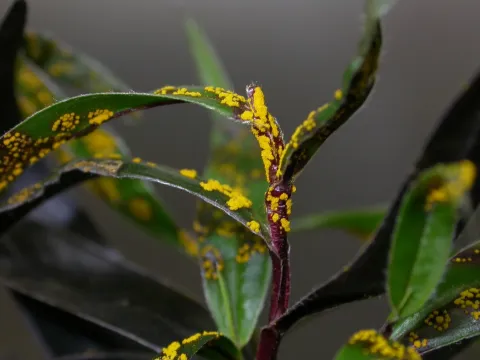
Pink disease
Erythricium salmonicolor
Pink disease is caused by the basidiomycete fungus Erythricium salmonicolor. It is a major phytopathogen known for causing significant damage to woody perennial crops in tropical and subtropical regions across the globe.
What the section contains
Pink disease
The fungus propagates through spores (basidiospores and conidia) dispersed by wind and splashing rainwater. It survives as mycelium within the infected bark, remaining viable until conditions favor its rapid growth and secondary spread.
High humidity and warm temperatures are the primary environmental drivers for the development of this disease. These conditions promote the formation of the characteristic pink or salmon-colored mycelial crust on the bark surface.
The mycelium penetrates the bark and reaches the cambium, disrupting the tree's vascular system. This interference with nutrient and water transport leads to the progressive decline of the infected branches and, eventually, the entire plant.
Historically, the pathogen has been referred to by various scientific names, including Corticium salmonicolor. Modern taxonomic classification places it under the genus Erythricium, which is essential for accurate identification and research.
Pink disease affects a wide range of important agricultural crops, including citrus, cocoa, coffee, rubber, and various orchard trees. The fungus primarily targets the trunk and branches, causing significant structural damage.
Damage to the woody tissue impairs the tree's ability to maintain healthy growth and fruit production. In severe cases, the structural integrity of branches is compromised, leading to breakage and potential death of the tree.
The overall impact on crop yields is substantial, as infected trees often show reduced vigor, yellowing foliage, and premature fruit shedding. Economic losses in commercial plantations are compounded by the costs of recurrent fungicide applications.
The presence of the fungus creates necrotic lesions on the bark, which act as points of entry for secondary invaders, such as wood-boring insects or other opportunistic pathogens that further damage the plant.
Younger plants are particularly susceptible and can be killed outright if the main stem is girdled by the fungal growth. Therefore, early detection is vital to maintain the longevity and productivity of the orchard.
The initial sign of infection is a thin, silky white mycelial growth on the bark surface. As the infection progresses, this growth thickens and turns a distinctive pink or salmon color, indicating spore formation.
As the mycelium penetrates deeper, the bark develops longitudinal cracks and begins to flake off. Exudation of sap or gum is a common defense reaction by the host tree at the edges of the necrotic zones.
Foliage on the affected branches typically yellows and dies, leading to dieback. This symptom often spreads from the outer parts of the branches toward the main trunk, which is a hallmark of the pathogen's advancement.
In cross-section, infected woody tissue often shows distinct browning and loss of density. This reflects the deep-seated nature of the fungus, which disrupts the transport of water and nutrients from the root system to the canopy.
Lesions are frequently located at branch forks or crotches where moisture is retained for longer periods. These locations provide the necessary microclimate for the pathogen to thrive and establish long-term infection sites.
Management focuses primarily on pruning out and destroying infected branches to eliminate the source of inoculum. All pruned material should be removed from the field and burned to prevent spore dispersal.
Improving orchard ventilation through proper pruning and thinning is critical. Increasing airflow helps the bark dry out quickly after rain, significantly reducing the viability of fungal spores and inhibiting their germination.
Copper-based fungicides are the standard chemical control measure. These should be applied preventively to the bark, particularly during the onset of wet seasons when conditions are most favorable for infection.
Preventing mechanical damage to the bark is a key preventive strategy. White-washing the stems of young trees can provide a protective barrier and discourage the initial colonization of the bark surface by the fungus.
- Sanitize pruning tools after every tree to prevent spread.
- Burn or bury all diseased plant material promptly.
- Apply copper-based sprays before the peak rainy season.
- Maintain proper tree spacing to optimize air circulation.
- Regularly monitor the canopy for early symptoms of branch dieback.