
Pigeon pea
Pigeon pea
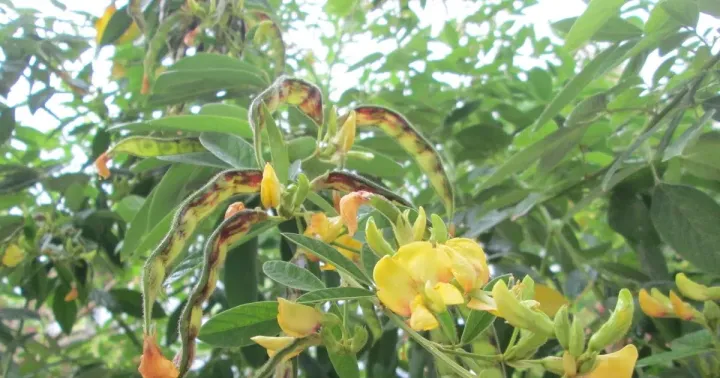
Description
How to identify
Pigeon pea, botanically known as Cajanus cajan, is a perennial legume primarily grown in tropical and subtropical regions. While it is a valuable crop, it serves as a significant reservoir for various soil-borne and viral pathogens affecting leguminous crops.
The plant belongs to the Fabaceae family and maintains a complex microbiome within its rhizosphere, often acting as a host for pathogenic fungi like Fusarium udum.
Biologically, it is a hardy shrub that can withstand moderate drought, but its persistence in the field allows pathogens to survive and build up high inoculum densities over time.
In terms of plant pathology, identifying Cajanus cajan as an infection hub is crucial because it allows these pathogens to persist during off-seasons and infect subsequent crop rotations.
Researchers monitor this plant for symptoms of vascular wilting and viral sterilization, which indicate high pathogen pressure in the local ecosystem.
What it damages
Pigeon pea is notorious for harboring pathogens responsible for fusarium wilt, which destroys the vascular system of plants and leads to total yield loss.
The plant is also a host for the Pigeon pea sterility mosaic virus (PPSMV), a disease that renders plants unable to produce pods and grains, causing massive economic impact.
Pathogens associated with this species compromise the nutritional transport, water uptake, and overall structural integrity of the plant host.
Fields previously planted with pigeon pea often show high rates of infection in succeeding soybean, chickpea, or kidney bean crops due to long-term survival of fungal spores.
Damage results in chlorosis, stunting, root rot, and the accumulation of toxic fungal metabolites, which lowers the quality and safety of harvested agricultural products.
When it appears
Pathogen development is most aggressive during the flowering and pod-filling stages, where the plant redirects energy, becoming more susceptible to stress-induced diseases.
High temperatures between 25°C and 35°C combined with moist soil conditions favor the rapid germination of fungal spores harbored by the pigeon pea.
Viral transmission by eriophyid mites typically occurs throughout the warm months, with population spikes correlated with specific local climate patterns.
Heavy rainfall events that follow dry spells facilitate the movement of zoospores in the soil, leading to rapid outbreaks of root-related pathologies.
Because pigeon pea is a perennial in many regions, the infection cycle can remain active year-round unless interrupted by rigorous cultural management practices.
Signs of infestation
Initial signs include yellowing of the foliage, starting from the lower leaves and progressing upwards, often accompanied by necrotic spots or marginal scorching.
Internal tissue examination reveals brown or black discoloration of the stem's vascular bundles, a classic indicator of severe fungal infection.
Plants affected by viral sterility show excessive branching and stunted growth, with flowers that fail to develop into healthy pods.
Root systems often display signs of decay, such as softened bark and necrotic lesions, which significantly impede the plant's nutrient uptake capabilities.
- Wilting of leaves during the peak hours of sunlight.
- Stunted plant growth and decreased vigor.
- Formation of dark patches or fungal mycelium on stem bases.
- Deformed, small, or completely empty pods.
- Premature dropping of leaves and flowers.
Control measures
The most effective strategy is the use of genetically resistant or tolerant pigeon pea varieties, which significantly reduces the pathogen inoculum load in the soil.
Adopting an integrated pest management (IPM) approach, including a strict 3-4 year crop rotation cycle, helps break the survival cycle of soil-borne pathogens.
Applying systemic fungicides as seed treatments is highly recommended to protect the crop during the vulnerable early developmental stages.
Sanitation practices, including the removal and burning of infected crop residues, are essential to stop the dissemination of spores to nearby fields.
Monitoring and controlling insect vectors like mites and whiteflies using targeted acaricides and insecticides helps prevent the spread of virus-based diseases.
Causes diseases · 1
Discussion
No discussions yet — be the first.