
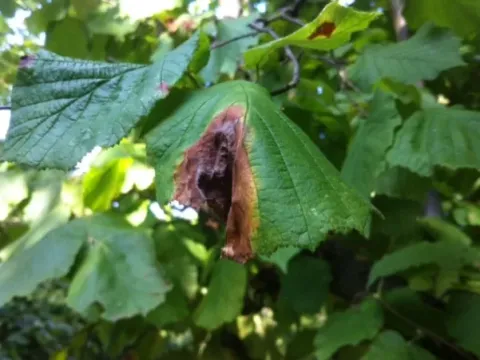
Piggotia coryli
Piggotia coryli
Piggotia coryli is a specialized fungal pathogen categorized within the order Dothideales. It primarily functions as a parasite on leaves of hazel (Corylus spp.), significantly impacting plant health during the active growth season.
What the section contains
Piggotia coryli
The life cycle of this fungus involves the production of pycnidia, which are dark, flask-shaped reproductive structures. These structures develop within the host leaf tissue and are crucial for the diagnostic identification of the fungus.
Taxonomically, the fungus is recognized as a member of the Dothideomycetes class. Its survival strategy involves overwintering on fallen infected leaves, making it a persistent threat in unsanitized orchards.
The spread of the pathogen is mediated by conidia, which are typically dispersed by rain splash and wind currents. This mechanism allows for rapid transmission within dense hazelnut plantings during humid weather.
Identification often requires microscopy to confirm the presence of pycnidia within the lesions, distinguishing it from other fungal leaf spot diseases that can also affect hazelnut foliage.
The host range of Piggotia coryli is strictly limited to Corylus species. Both cultivated hazelnuts (filberts) and wild hazel varieties are susceptible to this infection, which targets leaf tissues.
By causing necrotic lesions, the fungus impairs the leaf's photosynthetic capability. This reduction in energy production can lead to smaller nut size and overall decreased yield in industrial orchards.
Severe infestations frequently result in premature leaf drop, which weakens the tree's vigor. Stressed trees are notably more susceptible to frost damage and secondary pathogen attacks during the following seasons.
Economic losses are often correlated with the timing of the infection. Early-season onset significantly restricts the accumulation of carbohydrates necessary for the development of high-quality kernels.
While rarely fatal, the persistent damage caused by annual outbreaks of Piggotia coryli can reduce the productive lifespan of a hazelnut orchard if left unmanaged.
The initial symptoms appear as small, irregular, or circular spots on the leaves. These spots start as light brown lesions and eventually darken as the fungal reproductive structures emerge.
The development of black pycnidia in the center of the spots is the most diagnostic feature of this disease. These tiny, dot-like structures are clearly visible when inspecting the underside or upper surface of the leaf.
Lesions are often surrounded by a chlorotic halo, indicating the tree's reaction to the infection. In favorable humid conditions, these spots may merge, causing large, brown, necrotic sections on the leaf blade.
As the infection progresses, the infected tissue becomes dry and brittle. This leads to the characteristic "spotted" or "blighted" appearance of the foliage by mid-to-late summer.
The presence of these necrotic areas can lead to significant leaf deformation and subsequent yellowing, which eventually progresses to premature leaf abscission before the natural autumn cycle.
Sanitation is the cornerstone of Piggotia coryli management. Collecting and destroying fallen leaves during late autumn effectively removes the primary source of overwintering inoculum.
Good orchard management practices, such as proper pruning, are essential to improve air circulation. Better airflow ensures that leaf surfaces dry quickly after rainfall, which inhibits fungal spore germination.
Chemical control involving the use of protectant fungicides can be effective if applied before the onset of heavy infection periods. Copper-based fungicides are commonly recommended in commercial hazelnut production.
Integrated Pest Management (IPM) strategies emphasize regular monitoring of the orchard. Early detection allows for targeted treatments that can prevent widespread secondary infections across the canopy.
Recommended protective measures include:
- Removing and burning infected plant debris from the orchard floor.
- Applying systemic or contact fungicides during the early leaf-development stage.
- Enhancing tree resistance through balanced fertilization and stress reduction.