
Epicoccum neglectum
Epicoccum neglectum
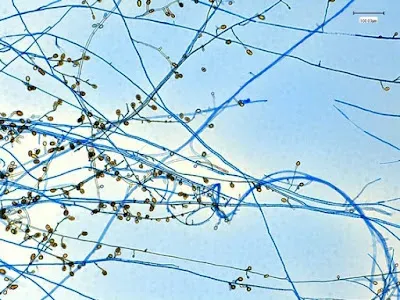
Description
How to identify
Epicoccum neglectum is a fungus belonging to the Ascomycota division. It is a cosmopolitan fungus often found in soil, organic debris, and as an endophyte in various plant species.
The fungus produces rapidly growing colonies, typically displaying colors ranging from orange and yellow to dark brown or black, depending on the culture medium and environmental conditions.
It forms sporodochia, which are dense cushions of hyphae bearing numerous conidia. These conidia are multicellular, globose to pyriform, and have a distinctively reticulated wall structure.
Historically considered a common saprophyte, current observations indicate that under specific environmental conditions, it can behave as an opportunistic pathogen causing tissue damage.
Identification is confirmed through microscopic analysis of the conidial morphology, which is highly characteristic of the Epicoccum genus.
What it damages
This pathogen impacts a wide range of agricultural crops, including wheat, barley, soybeans, sunflowers, and various horticultural species, causing leaf spots and blight.
The damage is particularly noticeable on leaves and stems, where the fungal infection leads to necrosis, chlorosis, and the subsequent reduction of the plant's photosynthetic capacity.
In seeds, the infection causes discoloration and loss of viability, leading to poor germination rates and stunted growth of seedlings, often associated with seedling blight.
The infection intensity significantly increases in crops that have already been weakened by abiotic stress or insect feeding, facilitating the colonization of the fungus into the plant tissue.
Economic impact is driven by both yield quantity reduction and the decline in market quality of the harvested produce due to visible fungal spots and decay.
Signs of infestation
Initial infection signs typically appear as small chlorotic lesions on leaves, which gradually expand into brown or dark-necrotic spots, sometimes surrounded by a yellowish halo.
In high humidity, a fuzzy, colored growth (often yellow, orange, or brown) appears on the affected surfaces, representing the mass production of fungal conidia.
Stem infections manifest as elongated dark stripes that can weaken the structural integrity of the plant, potentially leading to lodging or stem breakage under stress.
Seeds infected by Epicoccum neglectum often show dark spots or a general darkening of the seed coat, which is a sign of internal fungal colonization.
Symptoms are most distinct during periods of alternating wet and dry weather, which favor the sporulation and dissemination of the pathogen across the field.
Control measures
Good agricultural practices, such as crop rotation, are essential to reduce the inoculum level in the soil and prevent the carry-over of the fungus on crop residues.
Effective seed treatment using systemic fungicides is highly recommended to protect seedlings from early-stage infection and ensure uniform stand establishment.
Foliar application of fungicides containing triazoles or strobilurins during critical growth stages can effectively suppress the spread of the disease in the canopy.
Managing plant residues through tillage or deep burial helps in reducing the source of primary inoculum, making it harder for the pathogen to re-infect the next season's crop.
- Ensure adequate soil fertility to bolster plant defenses.
- Implement weed control to eliminate alternative hosts.
- Select resistant varieties if available for the specific crop.
Discussion
No discussions yet — be the first.