
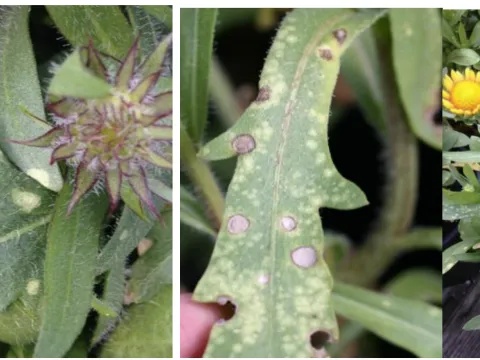
Entyloma gaillardianum
Entyloma gaillardianum
Entyloma gaillardianum is a fungal pathogen classified within the Smut fungi (Ustilaginomycetes). It is a specialized parasite that primarily targets plants belonging to the Asteraceae family, with Gaillardia being a common host.
What the section contains
Entyloma gaillardianum
The pathogen causes systemic infections, typically manifesting as localized leaf spot disease. Unlike many other smuts that cause massive swelling or gall formation, this species is noted for its impact on foliage through necrotic lesions.
The life cycle involves teliospores that survive in soil or on infected plant debris. In spring, these spores germinate to form basidia, releasing basidiospores that are disseminated by wind or splashing water to new hosts.
The fungal mycelium spreads intercellularly within the leaf parenchyma. By absorbing nutrients directly from the host cells, the fungus weakens the plant's overall metabolic processes.
Environmental conditions such as high humidity and moderate temperatures are essential for the rapid spread of the pathogen, often resulting in widespread infections in nursery and garden settings.
Gaillardia plants are the primary victims of this disease. Infection drastically reduces the photosynthetic surface area of the leaves, directly impacting the plant's energy production.
In severe cases, the disease affects petioles and flower stalks, leading to stunted development and reduced bloom quality, which is highly detrimental for ornamental use.
The loss of foliage affects the plant's aesthetic value, causing premature yellowing and leaf shedding. This makes the affected plants look ragged and weak, rendering them unsuitable for ornamental landscapes.
Reduced vigor makes the plants more susceptible to secondary stressors, including other diseases and pests. A weak plant is unlikely to survive harsh winters or summer heat.
For commercial growers, an outbreak of Entyloma gaillardianum can lead to significant economic losses due to decreased marketability and the necessity of destroying infected nursery stock.
The initial symptoms are characterized by small, chlorotic spots on the leaf surface. These spots eventually turn brown or tan, often appearing necrotic with time.
A yellow halo commonly surrounds the infected spots, indicating the presence of fungal toxins diffusing into the surrounding plant tissue. As the disease advances, these spots may merge into larger necrotic patches.
A distinct feature of the disease is the presence of fungal sporulation on the underside of the leaves. This fine, dusty layer confirms the diagnosis of a fungal infection.
Advanced stages of the disease lead to leaf curling and eventual drop. The plant displays signs of severe nutrient depletion and arrested growth compared to healthy specimens.
If left unmanaged, the necrotic lesions can cover a large portion of the canopy, leading to severe defoliation and the total collapse of the plant's structural integrity.
Cultural management is the first line of defense. Thorough removal and destruction of all infected plant debris at the end of the season is crucial to disrupt the pathogen's overwintering cycle.
Promoting good air circulation through proper plant spacing helps to lower humidity levels around the foliage, making the environment less favorable for spore germination.
Irrigation practices should be focused on the base of the plant to avoid wetting the foliage. Limiting water contact with leaves effectively restricts the spread of fungal spores.
Chemical control involving systemic fungicides or copper-based sprays can be effective if applied early in the infection cycle. Regular scouting is required to identify the initial symptoms.
Implementing a preventive program, especially in regions with frequent rain or high humidity, ensures that the pathogen does not gain a foothold in the garden or nursery.