
Description
Symptoms
The initial symptoms are characterized by water-soaked, dark lesions that expand rapidly. Infected tissues soften and undergo a process of liquefaction, becoming mushy to the touch.
On bananas, the rot appears as dark, sunken areas on the peel. As the infection progresses, the internal pulp of the fruit turns into a darkened, rotting mass, often emitting a distinct, pungent odor.
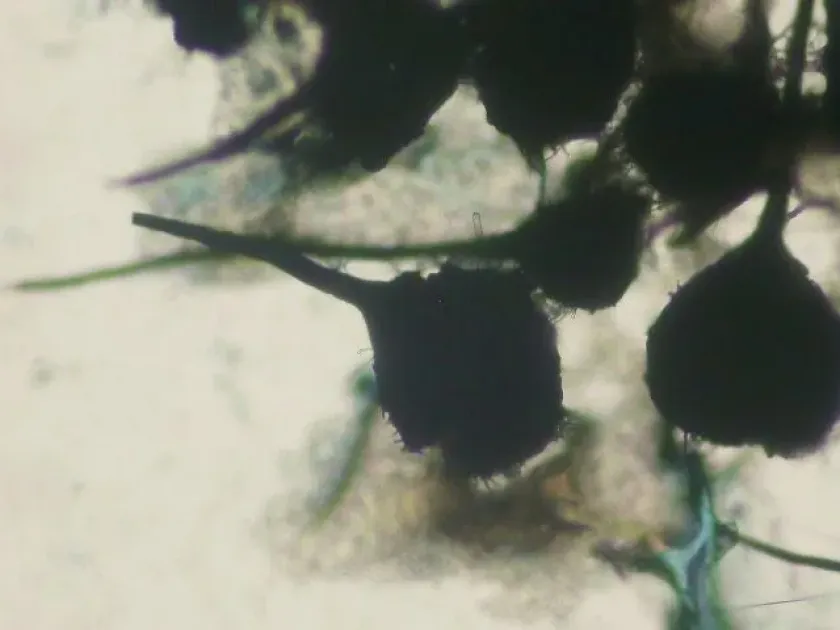
Under conditions of high humidity, a dense growth of fungal spores manifests on the surface of the infected areas. This growth typically appears as a greyish-black or coal-black mold.
In cases where the pathogen infects the stem, it causes internal necrosis and softening, which significantly weakens the plant and may lead to its collapse under the weight of the fruit bunch.
A diagnostic cross-section of an infected fruit reveals a sharp, distinct margin between the healthy tissue and the necrotic, darkened infected zones, confirming the presence of the pathogen.
Pathogen
The causative agent of this disease is the fungus Ceratocystis paradoxa, which is also recognized by its anamorph stage, Thielaviopsis paradoxa. It is a highly destructive pathogen found in tropical and subtropical regions worldwide.
The fungus has a broad host range, but it is particularly notorious for causing severe losses in banana plantations. It targets both the plant tissues and the ripening fruits, leading to rapid decay.
This pathogen demonstrates remarkable persistence, surviving in soil and plant debris for extended periods. It reproduces through various types of spores, allowing for efficient spread across fields.
Infection typically occurs through wounds, physical damage, or natural openings in plant tissues. The fungus can also remain latent in planting material, which facilitates its spread over large geographic distances.
The biological cycle involves the rapid production of conidia that colonize host tissue, effectively breaking down cellular structures and utilizing plant nutrients for further development.
Conditions for development
The primary drivers of Ceratocystis paradoxa development are high temperatures (25-30°C) and high relative humidity. These tropical conditions are optimal for spore germination and mycelial growth.
Physical injuries, such as those caused by improper handling, harvesting tools, or insect pests, provide the necessary entry points for the fungus to initiate infection in healthy plants.
Poor field ventilation and overcrowding create a microclimate with high moisture levels, which drastically accelerates the spread of spores from plant to plant throughout the plantation.
Post-harvest conditions play a critical role; if fruits are stored in environments with inadequate cooling and limited airflow, the fungus can cause significant rot within a very short timeframe.
Failure to implement field sanitation, such as leaving infected plant debris on the soil surface, allows the pathogen to build up an inoculum load, threatening subsequent planting cycles.
Why it matters
Ceratocystis rot causes substantial financial losses for banana growers by rendering a significant portion of the harvest unmarketable. The rapid decay makes fruit unsuitable for local or export sales.
The disease contributes to reduced plant vigor, causing premature fruit drop and reduced yield quality. Severe infections can lead to the death of entire stands of young plants.
Infected fruits lose their aesthetic and commercial value, failing to meet the strict quality standards required for the international banana trade and impacting the producer's profitability.
The presence of this fungus often necessitates the implementation of strict quarantine measures, limiting export opportunities and increasing the regulatory burden on the agricultural industry.
Ongoing costs for chemical protection, combined with the loss of harvested goods, substantially drive up production expenses, forcing farmers to seek more resistant varieties or intensive management practices.
Protection
Effective management begins with rigorous field sanitation, including the prompt removal and destruction of all infected plant tissues to reduce the overall fungal inoculum.
Post-harvest treatment with targeted fungicides is a standard industry practice. Dipping or spraying fruits with protective agents effectively suppresses rot development during transportation and storage.
Utilizing certified, disease-free planting material is the most reliable strategy to prevent the introduction of Ceratocystis paradoxa into new, clean growing areas.
Proper environmental control in packing houses and storage facilities, including maintaining low temperatures and adequate air circulation, is crucial for preserving fruit quality.
- Minimizing physical damage during harvesting and packing operations
- Implementing appropriate crop rotation to reduce soil-borne inoculum
- Disinfecting harvesting tools regularly to prevent cross-contamination
- Monitoring plantation health and applying biocontrol agents when necessary
Pathogens and affected parts
Affects crops · 1
Discussion
No discussions yet — be the first.