
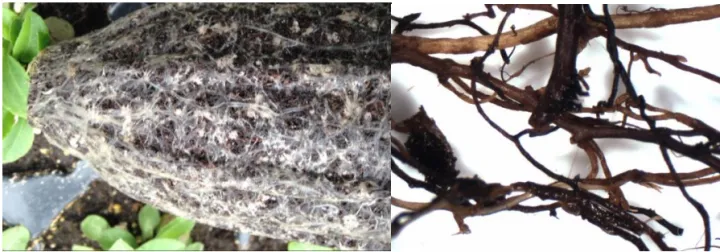
Description
Symptoms
Early symptoms of Chalara root rot are subtle and often confused with drought or nutrient deficiency. Plants may exhibit stunted growth, yellowing foliage (chlorosis), and gradual branch dieback.
The most distinctive signs appear on the roots. Infected root systems show dark, necrotic lesions that can turn black as the decay progresses. The affected tissues often become soft and mushy.
In advanced cases, the infection moves towards the root collar, resulting in cankers and bark cracking. The bark may slough off, exposing the rotting wood beneath, which eventually girdles the plant.
A telltale sign is the ease with which infected plants can be pulled from the soil. Since the secondary root system is largely destroyed, the tree loses its anchorage, revealing a decayed, odor-emitting root structure.
Microscopic analysis or laboratory culturing of root samples often reveals the characteristic spores of the pathogen, which confirm the diagnosis of Chalara thielavioides infestation.
Pathogen
The causal agent of this disease is the soil-borne fungus Chalara thielavioides (synonym Thielaviopsis thielavioides). This pathogen is known for its ability to persist in the soil for extended periods, making it a challenging threat to tree cultivation.
The fungus acts as a facultative parasite, primarily attacking the root tissues. It survives in the soil through vegetative mycelium and hardy spores, allowing it to remain dormant until favorable environmental conditions appear.
The primary hosts of this pathogen are trees belonging to the Elm family (Ulmaceae). However, it has also been observed affecting various nursery-grown shrubs and ornamental species, often spreading through infected containers or equipment.
The life cycle of the pathogen is highly dependent on environmental moisture. It colonizes the root cortex, disrupting the plant's ability to uptake water and nutrients, which eventually leads to the systemic decline of the tree.
Effective management requires understanding that the pathogen can spread through water runoff, movement of contaminated soil, and the use of infected propagation material from nurseries.
Conditions for development
Excessive soil moisture is the primary driver of Chalara root rot. Waterlogged soils provide the perfect environment for the zoospores of the fungus to move and infect new, healthy roots.
Temperatures between 15°C and 22°C (60°F - 72°F) are optimal for the growth and colonization of the fungus. During these periods, the pathogen's development speed increases significantly.
Heavy, poorly aerated soils contribute to the severity of the disease. In compacted environments, the roots are already under stress, which lowers the tree's natural defense mechanisms against soil pathogens.
Cultural practices such as over-irrigation or planting in improperly sterilized soil are frequent contributors to outbreaks in nurseries. These conditions allow the fungus to thrive and build up a high inoculum density.
Mechanical damage to roots during transplanting or cultivation acts as an entry point for the fungus, as the plant releases exudates that stimulate the germination of dormant fungal spores in the immediate vicinity.
Why it matters
The economic impact of Chalara root rot is significant, particularly in commercial nurseries where it can cause the death of young Elm saplings in a very short time frame.
Infected areas often become problematic for years, as the fungus is highly persistent. This forces nurseries to discard large amounts of stock and potentially invest in expensive soil sterilization techniques.
For landscape trees, the disease destroys the plant's aesthetic value and structural integrity, leading to hazardous conditions when trees die and potentially fall due to root failure.
The presence of this fungus acts as a barrier to reforestation efforts, as young trees planted into infected sites often succumb to the disease before they can establish properly.
Ultimately, the disease reduces the resilience of the trees, making them more susceptible to secondary stressors like insect infestations, drought, and other opportunistic pathogens.
Protection
Prevention through strict phytosanitary measures is the most effective approach. This includes sourcing healthy planting material and ensuring that all containers and equipment are thoroughly disinfected.
Proper water management is essential. Implementing efficient drainage systems and avoiding over-watering in nurseries can significantly lower the risk of fungal infection.
If an outbreak occurs, infected plants should be promptly rogued out and destroyed, along with a portion of the surrounding soil, to prevent the pathogen from spreading through the bed.
Chemical control involving systemic fungicides applied to the root zone can be used as a therapeutic measure, though it is most effective when used preventively or at the very onset of infection symptoms.
- Improve soil aeration by incorporating organic amendments.
- Avoid over-fertilization, which can encourage pathogen growth.
- Use biological control agents (e.g., Trichoderma species).
- Regular inspections of root health before transplanting.
Pathogens and affected parts
Affects crops · 1
Discussion
No discussions yet — be the first.