
Stewart's wilt
Xanthomonas stewartii
Description
How to identify
Stewart's wilt is a serious bacterial disease caused by the pathogen Xanthomonas stewartii, which belongs to the family Xanthomonadaceae.
This gram-negative, non-spore-forming bacterium is a systemic plant pathogen that specifically colonizes the xylem of its host plants.
It is classified as a regulated pest in many regions due to its potential to cause devastating economic losses in maize production worldwide.
The bacteria thrive within the vascular tissues, producing an extracellular polysaccharide matrix that physically blocks the movement of water and nutrients.
Genetic diversity within the species allows it to adapt to different environmental conditions and maintain high virulence against susceptible crop varieties.
What it damages
Maize (Zea mays) is the primary host for Xanthomonas stewartii, with sweet corn varieties being particularly susceptible to severe infections.
The disease manifests in two main phases: the seedling wilt phase, which can cause total plant death, and the leaf blight phase, affecting older plants.
Heavy infections lead to significant yield reduction, as the blockage of vascular bundles prevents proper kernel filling and ear development.
Besides direct yield loss, the disease quality degradation and systemic nature make it a difficult pathogen to manage once it is established in a field.
Secondary infections may occur in the field, further spreading the bacteria to healthy plants through insect vectors or mechanical damage.
When it appears
The disease cycle is intimately linked to the survival and activity of the corn flea beetle (Chaetocnema pulicaria), which serves as the primary vector.
Bacteria overwinter inside the gut of the adult flea beetles and are introduced into the young corn plants during their initial feeding sessions in the spring.
As temperatures rise and moisture levels increase, the bacterial population rapidly expands within the plant tissues, leading to systemic infection.
Horizontal spread throughout the field occurs during the growing season as different beetle species move from infected plants to healthy ones.
By the end of the season, the bacteria are disseminated, and vectors move to overwintering sites, ensuring the cycle continues into the next year.
Signs of infestation
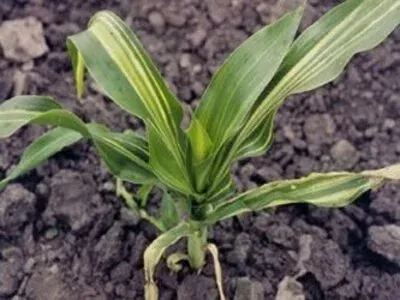
Early symptoms include characteristic pale green or yellow streaks that develop along the veins of the leaves, often with wavy or irregular margins.
As the infection progresses, these streaks turn necrotic and brown, potentially leading to the death of the entire leaf and plant wilting.
A diagnostic sign is the presence of yellow or white bacterial ooze emerging from the cut vascular bundles when a stem or leaf is cross-sectioned.
Stunting of the plants and the emergence of excessive side shoots from the base are common indicators of systemic Stewart's wilt infection.
In severe cases, the entire plant may collapse, especially during periods of water stress, as the vascular system becomes completely plugged.
Control measures
Planting resistant or tolerant corn hybrids is the most sustainable and effective method for managing the spread and impact of Stewart's wilt.
Insecticide treatments targeting flea beetle populations during the early seedling stage are critical to preventing the transmission of the bacteria.
Strict adherence to phytosanitary regulations and the use of pathogen-free seed are essential to prevent the introduction of Xanthomonas stewartii.
Crop rotation and weed management reduce the availability of alternative hosts and overwintering sites for the beetle vectors, lowering infection pressure.
Regular field scouting and monitoring for the first appearance of symptoms allow farmers to make timely decisions regarding chemical intervention.
Causes diseases · 1
Discussion
No discussions yet — be the first.