
Xanthomonas fuscans
Xanthomonas fuscans
Description
How to identify
Xanthomonas fuscans is a gram-negative, rod-shaped bacterium that acts as a significant phytopathogen, specifically targeting various species of beans. It belongs to the Xanthomonadaceae family and is known for its high host specificity.
The bacterium moves through a single polar flagellum and produces extracellular polysaccharides that facilitate the formation of biofilms. These biofilms are crucial for the colonization of plant surfaces and the subsequent invasion of host tissues.
The pathogen survives in crop debris, infested seeds, and the soil for several growing seasons. It disseminates through wind-driven rain, irrigation, agricultural equipment, and insect vectors, making it highly mobile within field environments.
Diagnostic identification typically relies on PCR-based molecular markers or ELISA tests, as visual symptoms can sometimes be confused with other bacterial diseases, such as common bacterial blight caused by Xanthomonas phaseoli.
The virulence of Xanthomonas fuscans is regulated by type III secretion systems that inject effector proteins into host cells, effectively suppressing the plant's immune response and allowing the bacteria to proliferate within the apoplast.
What it damages
The primary host of Xanthomonas fuscans is the common bean (Phaseolus vulgaris). This pathogen is the causative agent of a severe bacterial blight that poses a constant threat to bean yields worldwide.
The disease impacts all aerial parts of the plant, including leaves, stems, petioles, and pods. When pods are infected, the bacteria can penetrate the seeds, which then serve as the primary inoculum for the next crop cycle.
Under warm and humid conditions, the pathogen spreads rapidly, causing significant defoliation and reduction in pod filling. In severe cases, the entire plant may wilt and die prematurely, leading to massive yield losses.
In addition to direct yield loss, the quality of harvested beans is significantly reduced due to blemishes and necrotic spotting, making them unsuitable for commercial markets or food processing.
Infected seeds often show reduced germination rates and weakened seedling vigor, which leads to poor stand establishment and further economic losses for farmers.
Signs of infestation
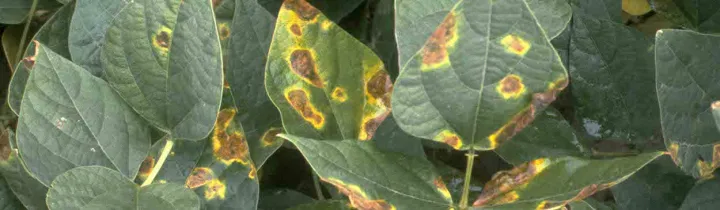
Early symptoms appear as small, water-soaked spots on the foliage. These lesions eventually develop into angular shapes delimited by leaf veins, often surrounded by a distinct yellow chlorotic halo, which is a classic indicator of the disease.
Pods show characteristic sunken, reddish-brown spots. When the humidity is high, a yellowish or cloudy bacterial ooze may be visible on the surface of these spots, which dries into a crusty layer on the plant tissue.
Stem infections manifest as longitudinal brown streaks or lesions that can cause the stem to become brittle and eventually break. Systemic infection leads to a general drooping and wilting of the leaves.
Infected seeds are often shriveled and show localized spotting or discoloration. These seeds are the primary route of long-distance pathogen dispersal and are dangerous for storage and future planting.
- Water-soaked, angular leaf lesions with yellow halos.
- Sunken reddish-brown lesions on pods.
- Cloudy bacterial ooze under high humidity.
- Longitudinal stem streaks and necrosis.
- Discolored and shriveled seed morphology.
Control measures
The most fundamental strategy for control is the use of high-quality, pathogen-free, and certified seeds. Seed health testing is crucial to prevent the introduction of Xanthomonas fuscans into clean fields.
Implementing strict crop rotation programs, avoiding beans for at least three to four years in infected fields, is highly effective in reducing the soil-borne inoculum level.
Post-harvest management involves the removal and destruction of crop residues. Deep plowing helps bury the debris, which facilitates faster decomposition and reduces the survival rate of the bacteria.
During the growing season, copper-based bactericides can be used to manage the bacterial spread. However, these are preventative in nature and their effectiveness decreases significantly once the disease has established itself.
Breeding and planting resistant bean cultivars remains the most sustainable and efficient approach for long-term management of the disease, reducing the reliance on chemical inputs and protecting overall yield potential.
Causes diseases · 1
Discussion
No discussions yet — be the first.