
Rathayibacter tritici
Rathayibacter tritici
Description
How to identify
Rathayibacter tritici is a Gram-positive, coryneform bacterium belonging to the family Microbacteriaceae. It is a specialized plant pathogen responsible for the disease known as yellow slime or basal glume rot of wheat.
The biology of this bacterium is uniquely tied to the wheat gall nematode, Anguina tritici. The nematode acts as both a vector and a protective host for the bacteria throughout their life cycle.
The pathogen does not form spores but possesses remarkable survival capabilities within the galls created by the nematode. It can remain dormant in soil or stored grain for several years under dry conditions.
The cells are non-motile rods that exhibit strong adhesion to the nematode cuticle. This symbiotic-like relationship is critical for the bacterium to successfully infect the plant tissues during the germination stage.
Identification typically involves laboratory techniques such as selective agar plating, ELISA tests, or PCR-based diagnostics to detect the presence of the pathogen in seed lots.
What it damages
The primary host for Rathayibacter tritici is wheat, although it can infect rye and certain grass species. The disease primarily affects the inflorescences, causing severe structural damage.
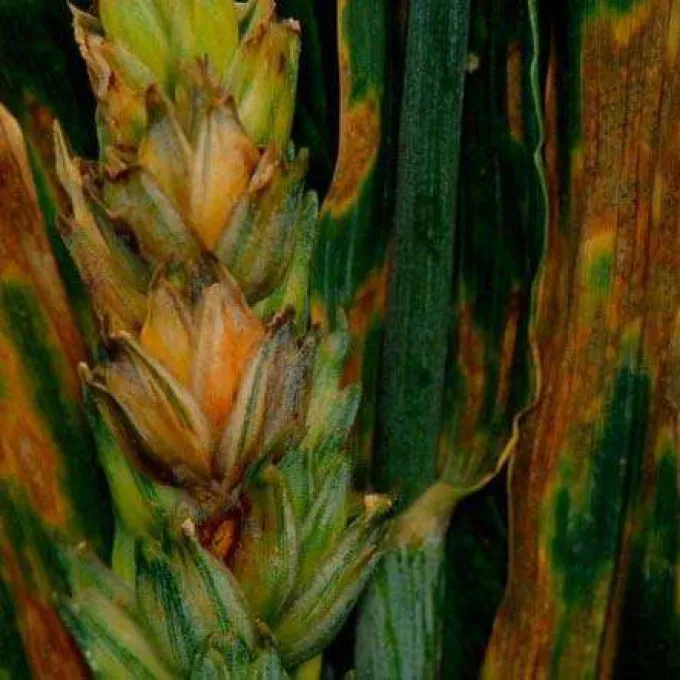
Infected spikes become stunted, twisted, and deformed. Instead of producing healthy grain, the glumes are filled with a yellow, viscous bacterial exudate, rendering the crop unharvestable.
The pathogen causes significant yield loss by replacing grain with bacterial galls. This leads to a total reduction in seed production and a decrease in the overall quality of the harvested grain.
Systemic infection interferes with the plant's vascular development, leading to yellowing of foliage and general plant weakness. This limits the photosynthetic capacity and vitality of the wheat crop.
Economically, the presence of this pathogen poses a major threat, leading to quarantine restrictions and loss of marketability for infected agricultural products.
When it appears
The development of the disease is strictly synchronized with the growth cycle of the host plant and the life cycle of the nematode vector. Infection begins during the early seedling stage.
The symptoms become most pronounced during the heading stage of wheat. Bacteria migrate with the nematode larvae through the plant stem to the developing spikelets.
Warm and humid weather conditions are optimal for the release of bacteria from the galls and subsequent infection. High moisture levels facilitate the movement of the pathogen within the plant canopy.
Post-harvest, the bacteria persist within the hardened galls, which either remain in the field or are mixed with the harvested grain. They survive in this state until the next cropping season begins.
Continuous wheat cropping systems significantly increase the population density of the nematode vector, thereby increasing the risk of widespread disease outbreaks in the following years.
Signs of infestation
The most visible symptom is the presence of a yellow or orange bacterial slime (exudate) covering the spikes, which glues the glumes together. This slime hardens into a visible crust.
Plants affected by the disease often exhibit chlorosis, stunted growth, and contorted or curled leaf structures. These symptoms are often early indicators of a systemic infection.
Examination of the infected spikes reveals the absence of normal kernels. Instead, the glumes contain galls, which are distorted, dark brown, or black structures filled with bacterial mass.
A mild, distinct odor may be detected near heavily infested fields, particularly in the morning when humidity is high. This scent is caused by the bacterial degradation of plant tissues.
Scouting for deformed spikes and the characteristic yellow crust is essential during the grain-filling phase to assess the severity of the infection in the field.
Control measures
The most effective strategy is the use of certified, clean seed. Modern seed cleaning machinery can effectively remove galls from grain lots, significantly reducing the inoculum load.
Implementing a rigorous crop rotation program is vital. Rotating wheat with non-host crops for at least two to three years helps break the life cycle of the nematode vector in the soil.
Cultural practices, such as deep plowing and the destruction of volunteer wheat plants, help reduce the reservoir of the nematode in the field environment.
Chemical control options are generally limited due to the protected nature of the pathogen within the nematode galls. Focus should remain on preventative measures and strict sanitary protocols.
Quarantine measures and inspection of seed lots are necessary to prevent the geographic spread of the pathogen. Early detection and containment of initial outbreaks protect regional agriculture.
Causes diseases · 1
Discussion
No discussions yet — be the first.