
Pseudomonas viridiflava
Pseudomonas viridiflava
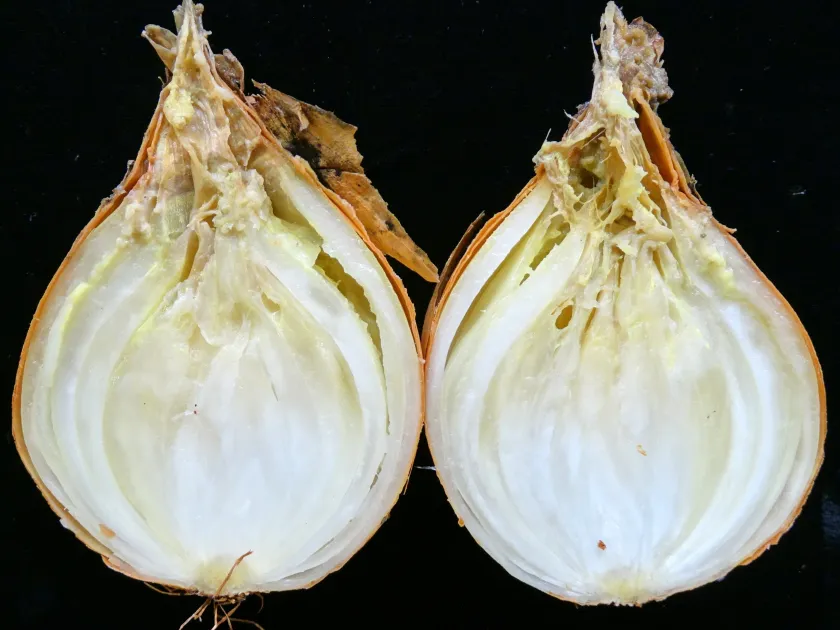
Description
How to identify
Pseudomonas viridiflava is a Gram-negative, rod-shaped, motile bacterium belonging to the group of fluorescent pseudomonads. Taxonomically, it is classified within the Bacteria kingdom, the Pseudomonadota phylum, and the Pseudomonas genus.
This microorganism is a facultative parasite that produces pectinolytic enzymes, which degrade plant cell walls. The bacterium grows readily on standard laboratory media, often exhibiting a characteristic fluorescence under ultraviolet light.
The natural reservoir for this pathogen includes soil, crop residues, and seeds. Its ability to persist in the rhizosphere allows the bacterium to survive for extended periods, even when a suitable host crop is not present.
Genetic diversity within the species enables it to adapt to various environmental conditions and management practices. As a phytopathogen, it often acts as a co-factor in disease complexes, exacerbating damage caused by other organisms.
Laboratory diagnosis involves biochemical testing and PCR-based molecular methods. Identifying this pathogen is crucial for implementing timely quarantine measures and effective integrated pest management strategies in farming.
What it damages
With a wide host range, Pseudomonas viridiflava poses a significant threat to agriculture. It infects vegetables such as tomatoes, cucumbers, and cauliflower, as well as legumes and industrial crops like oilseed rape and sunflowers.
Infection can affect various plant organs, causing wilting, necrotic spotting, or soft rot. The pathogen is particularly damaging in protected cultivation environments where high humidity promotes rapid spread and disease development.
Fruit infection leads to the development of soft bacterial rot, rendering the produce unmarketable. Besides fruit, the bacterium often targets blossoms, leading to sterility or the malformation of seeds, which further impacts the yield quality.
On industrial crops, the bacterium causes stem and leaf necrosis, reducing photosynthetic capacity and overall crop productivity. Pathogen entry typically occurs through natural openings (stomata) or wounds inflicted by mechanical handling.
The overall economic impact includes significant yield losses and degraded seed quality. Infected seeds serve as the primary source of dissemination to new areas, underscoring the importance of strict seed certification protocols.
When it appears
The pathogen is most active under conditions of moderate temperatures (18–25°C) and high humidity. These environmental conditions are critical for the transition of the bacteria from a latent state to active parasitism.
In greenhouse settings, disease outbreaks frequently occur during periods of poor ventilation when moisture film on leaves facilitates bacterial reproduction. Heavy rainfall and wind-driven rain are primary drivers for field-scale epidemics.
The spring season is a vulnerable time for seedlings, as the bacteria can cause damping-off and rapid seedling mortality. Mechanical damage from tillage operations or hail provides entry points for infection to reach internal tissues.
During the autumn harvest, the pathogen can spread via contaminated machinery and tools. This is particularly dangerous for produce in storage, as even minor infections can escalate into widespread rot during post-harvest handling.
Throughout the winter, the bacteria persist in the soil or on crop debris. Its high resilience to environmental stressors allows it to survive the cold season and initiate new infection cycles at the start of the next growing season.
Signs of infestation
Symptoms vary depending on the host plant, but a primary characteristic is the appearance of necrotic spots with a chlorotic yellow halo. These spots are often angular in shape, bounded by leaf veins.
Under high humidity, bacterial exudate may appear on the surface of infected tissues as cloudy droplets. Upon drying, these droplets form a shiny film, which is a key diagnostic feature of bacterial infections.
- Appearance of water-soaked spots that darken rapidly.
- Tissue necrosis on stems and leaf petioles.
- Specific malodorous smell during advanced tissue decay.
- Stunted growth and premature wilting of plants.
- Deformation of fruit and development of wet lesions.
In tomatoes, stem necrosis is common and often leads to plant death. Cucumbers exhibit angular leaf spot, which progresses rapidly and can cause severe defoliation if left unchecked.
Unlike fungal diseases, affected tissues do not show mycelial growth. Instead, the tissue quickly softens and collapses into a mushy mass due to the enzymatic breakdown of cellular components by the bacteria.
Control measures
A comprehensive integrated management approach is essential for controlling Pseudomonas viridiflava. Prevention is paramount, starting with the use of certified, disease-free seed material and strict adherence to seed treatment protocols.
Implementing crop rotation disrupts the bacterial life cycle within the soil. Furthermore, timely weed management is necessary, as wild hosts can serve as inoculum reservoirs throughout the year.
Climate control in greenhouses is critical; maintaining lower humidity and ensuring proper ventilation prevent the moisture accumulation required for infection. Regular sanitation of tools, containers, and greenhouse structures is mandatory.
Chemical control involves the use of copper-based fungicides, which act as bactericides. These are most effective when applied preventively, as curative action is limited once the disease has become established in the plant tissues.
Biological control using antagonistic bacteria, such as specific strains of Bacillus subtilis, is an emerging strategy. These biologicals create a protective barrier and outcompete the pathogen for resources, effectively reducing disease incidence.
Causes diseases · 1
Discussion
No discussions yet — be the first.