
Pseudomonas cannabina
Pseudomonas cannabina
Description
How to identify
Pseudomonas cannabina is a Gram-negative, rod-shaped bacterium classified within the Pseudomonadaceae family. It is a well-known plant pathogen responsible for causing bacterial blight and leaf spot diseases in various industrial and medicinal hemp cultivars.
The bacterium utilizes polar flagella for motility and is characterized by the production of coronatine, a toxin that mimics jasmonic acid, which facilitates the infection process by manipulating the plant's defense signaling pathways.
What it damages
The pathogen primarily affects Cannabis sativa, leading to severe leaf spot symptoms. In industrial hemp production, this pathogen can cause significant reductions in biomass, fiber quality, and oil content, impacting the economic value of the crop.
Beyond crop loss, systemic infections can lead to premature leaf drop and stunted growth. The reduction in photosynthetic area significantly compromises the plant's ability to store energy, making the crop less vigorous and more prone to environmental stress.
When it appears
The disease typically emerges during periods of high humidity, frequent rain, and moderate temperatures. The pathogen survives between growing seasons in infected seeds, crop debris, and sometimes as an epiphyte on alternative weed hosts.
Spread is primarily mediated by water splashes from rain or irrigation systems, which transport bacteria to healthy tissue. High-density planting increases the risk of infection by creating a humid microclimate that favors rapid bacterial multiplication.
Signs of infestation
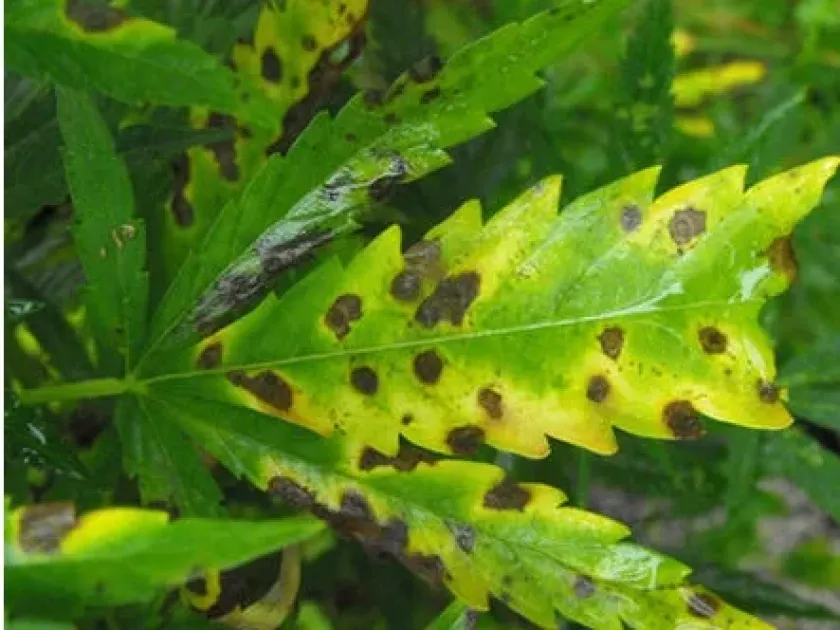
Infection is typically characterized by small, water-soaked spots on leaves that eventually turn brown or necrotic. These lesions are often restricted by leaf veins, resulting in a characteristic angular appearance on the foliage.
Under high humidity, a bacterial ooze may develop on the surface of the lesions. As the infection progresses, large parts of the leaf tissue may die, turn yellow, and wither, ultimately leading to significant defoliation of the canopy.
Control measures
Management strategies focus on the use of clean, certified seeds to prevent the introduction of the pathogen into new fields. Crop rotation is essential to break the infection cycle, as the bacterium can persist in soil for several months.
- Practice proper spacing to improve air circulation.
- Remove and destroy infected plant debris after harvest.
- Control alternative weed hosts in and around fields.
- Apply copper-based bactericides if environmental conditions favor disease outbreaks.
Causes diseases · 1
Discussion
No discussions yet — be the first.