
Potato virus Y
Potato virus
Description
How to identify
Potato virus Y (PVY) is a member of the family Potyviridae, genus Potyvirus. It is a single-stranded RNA virus and one of the most economically significant plant viruses affecting solanaceous crops.
The virus particles are filamentous, typically measuring 730–750 nm in length. As an obligate parasite, it relies entirely on the host plant for replication and survival.
PVY exhibits a high degree of genetic diversity, resulting in various strains such as PVY-O, PVY-N, and PVY-NTN, which differ in symptom expression and crop damage severity.
Transmission occurs primarily in a non-persistent manner via aphid vectors, which pick up the virus from infected plant sap and transmit it to healthy plants within seconds of feeding.
The virus can also be spread mechanically through contact between plant leaves, pruning, or the use of contaminated farm equipment during routine field maintenance.
What it damages
The virus affects a wide range of host plants, most notably potato, tomato, tobacco, and pepper. It causes systemic infection that disrupts plant growth and development.
Numerous weed species, particularly those in the Solanaceae family, act as essential reservoirs for the virus, allowing it to survive between growing seasons in fields.
Signs of infestation
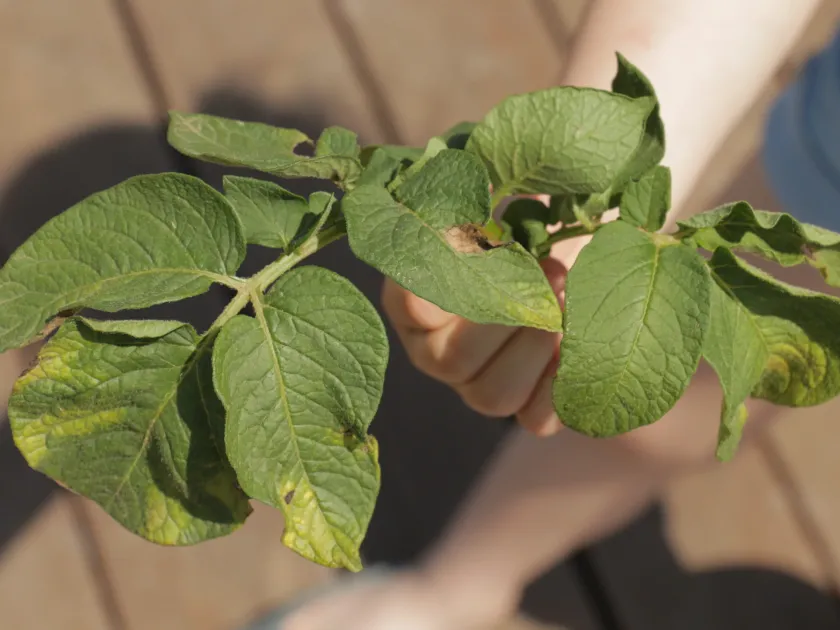
Symptoms vary depending on the strain and the potato cultivar. Common manifestations include mosaic patterns, mottling, and crinkling of the leaf surface.
Veinal necrosis, where dark stripes or spots form along the leaf veins, is a hallmark of severe infection, leading to rapid yellowing and premature death of the foliage.
In tubers, the infection can cause specific necrotic lesions (such as potato tuber necrotic ringspot disease), significantly reducing the quality and marketability of the crop.
Control measures
The use of certified, virus-free seed potatoes is the most effective strategy to prevent the introduction and spread of the virus within commercial production areas.
Roguing, or the systematic removal and destruction of symptomatic plants, is crucial in the early stages of crop development to prevent secondary viral spread by aphids.
Managing aphid populations with targeted insecticide applications can reduce the number of potential vectors, although it may not prevent initial non-persistent transmission.
Maintaining proper spatial isolation between seed potato fields and other solanaceous crops helps minimize the risk of external viral influx into the production area.
Effective weed management strategies contribute to the reduction of viral reservoirs, thereby lowering the pressure of infection and ensuring higher yields.
Discussion
No discussions yet — be the first.