
Potato virus
Potato virus
Description
How to identify
Potato viruses are a group of intracellular plant pathogens that infect potato crops, leading to significant yield losses and variety degeneration. As obligate parasites, they rely entirely on the host plant's cellular machinery to replicate their genetic material, which is usually composed of RNA.
These viruses are classified based on their genome structure and morphological characteristics. Common examples include Potato Virus Y (PVY), Potato Virus X (PVX), and Potato Virus S (PVS), which belong to families like Potyviridae and Alphaflexiviridae.
Transmission of these pathogens primarily occurs through insect vectors, with aphids being the most significant culprits. These insects ingest the virus while feeding on infected tissue and rapidly transmit it to healthy plants during subsequent feeding sessions.
Mechanical transmission is another critical pathway. Viruses can be easily spread through contact between foliage, contaminated agricultural tools, or even through human activity in the field. Once introduced into a plant, the virus spreads systemically through the phloem.
Detection often requires sophisticated diagnostic methods, such as ELISA (Enzyme-Linked Immunosorbent Assay) or RT-PCR, because symptoms can be latent or mimic other nutritional deficiencies, making visual inspection alone insufficient for certification purposes.
What it damages
The primary hosts for potato viruses are members of the Solanaceae family. Besides potatoes, these pathogens often infect tomatoes, peppers, and eggplants, creating a complex cycle of cross-infection in mixed agricultural landscapes.
Systemic infection means that the virus is present in all parts of the plant, including the tubers. This is particularly problematic because the virus is passed down to the next generation of plants via seed potatoes, leading to a permanent decline in the quality of the planting stock.
The physiological impact on the plant includes impaired photosynthesis and restricted nutrient transport. Consequently, the plant exhibits stunted growth, reduced leaf area, and weakened root systems, which significantly lower the plant's overall vitality and competitiveness.
Tubers are also severely affected by these pathogens. They often decrease in size and quality, potentially showing surface necrosis or internal discoloration. This renders the produce unsuitable for fresh market sale or commercial storage.
Economic damage is substantial, encompassing both direct yield reduction and the long-term cost of replacing infected seed stock. In severe cases, viral diseases can lead to total crop failure and the loss of entire potato varieties.
Signs of infestation
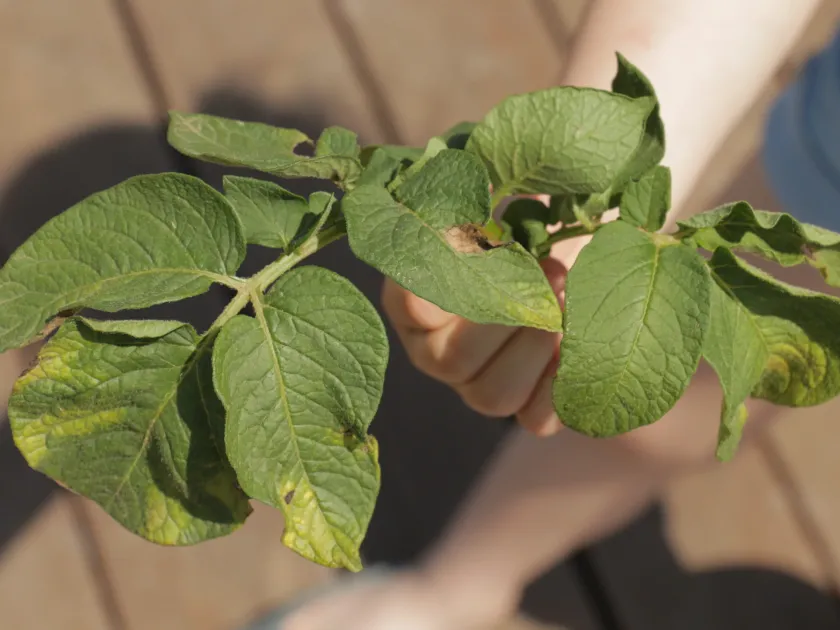
The most common visual symptom is a mosaic pattern on the leaves, characterized by alternating patches of light and dark green. In addition to mosaicism, leaves may exhibit crinkling, waviness, or downward curling of the margins.
Necrosis is a severe indicator of viral stress, appearing as brown spots or stripes along the leaf veins. In advanced stages, this leads to premature senescence of the foliage and significant loss of photosynthetic capacity.
Stunted growth is a hallmark of viral infection. Infected plants often show shortened internodes, leading to a compact, dwarfed appearance. This lack of vigor is usually clearly visible when comparing infected plants to healthy ones in the same row.
Tuber symptoms are equally concerning and can include external cracking, depression, or internal necrotic rings. These symptoms often signal that the plant has been infected for an extended period or that the virus concentration is extremely high.
- Mosaic patterns on leaf surfaces
- Leaf crinkling and marginal curling
- Stunted growth and dwarfing
- Necrotic stripes along leaf veins
- Internal tuber discoloration and necrosis
Control measures
The foundation of potato virus management is the exclusive use of certified, virus-free seed potatoes. Regularly sourcing fresh, indexed seed stock is the most effective way to prevent the cumulative buildup of viral loads in the crop.
Controlling insect vectors, particularly aphids, is essential. Implementing an integrated pest management (IPM) strategy that includes systemic insecticide applications can drastically reduce the incidence of primary and secondary transmission in the field.
Maintaining spatial isolation from other Solanaceous crops reduces the risk of virus influx from surrounding areas. Weed control is equally important, as various wild hosts can harbor the viruses throughout the season.
Field sanitation protocols, including the removal and destruction of symptomatic plants (roguing), help limit the spread of the pathogen. Workers should also ensure that tools are disinfected between fields to prevent mechanical transmission.
Choosing resistant or tolerant varieties is a strategic approach to long-term control. By selecting genotypes that naturally suppress viral replication or show minimal symptom development, growers can maintain productivity even in the presence of the pathogen.
Discussion
No discussions yet — be the first.