
Potato virus
Potato virus
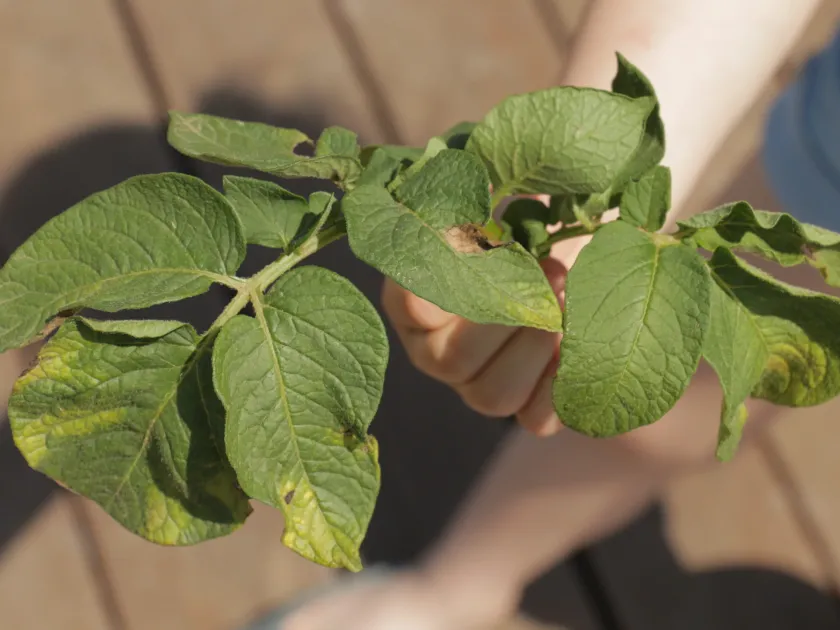
Description
How to identify
Potato viruses are significant plant pathogens, with the Potato virus Y (PVY) being one of the most economically damaging species within the Potyvirus genus. These are submicroscopic, obligate parasites composed of genetic material encapsulated in a protein shell.
They are intracellular entities that strictly rely on the host plant's cellular machinery to replicate. By hijacking the plant's metabolic processes, they cause systemic infections that can persist for the entire life of the plant and are transmitted to subsequent generations through tubers.
Transmission occurs primarily through vectors such as aphids, which transfer the virus while feeding on plant sap. Additionally, mechanical transmission through farm equipment, tools, or even direct plant-to-plant contact in dense canopies can contribute to the spread.
Biologically, these viruses are highly stable within the tuber tissue. Once a plant is infected, the virus spreads through the phloem to all parts of the plant, including the underground tubers, making vegetative propagation the primary pathway for the pathogen's longevity.
Modern diagnostics rely on sensitive techniques like ELISA (Enzyme-Linked Immunosorbent Assay) and RT-PCR to detect the presence of viral RNA in plant sap. These tests are essential for certification programs ensuring that seed potatoes are free from dangerous viral strains.
What it damages
While potatoes are the primary host, these viruses also infect other Solanaceous crops, including tomatoes, peppers, and eggplants, as well as various weeds. These alternative hosts serve as reservoirs that can harbor the virus during the off-season.
The economic impact is profound, causing progressive degeneration of potato varieties. Infected plants exhibit disrupted photosynthesis and altered hormonal balance, which directly results in reduced tuber weight, size, and overall marketable yield.
Over successive generations, the accumulation of viral particles leads to a dramatic drop in yield and quality. Tubers from infected plants may show internal discoloration, malformations, or decreased vigor, rendering them useless as seed stock.
In high-pressure environments, yield losses can range from 30% to over 80%. This potential for massive losses makes virus management the cornerstone of potato production in both intensive commercial farms and small-scale gardens.
Additionally, viral infection weakens the plant's natural defense systems, making it more susceptible to secondary infections from fungi, bacteria, and other environmental stressors, further compounding the total damage to the crop.
When it appears
The infection cycle begins in the spring when infected tubers are planted. The emerged sprouts immediately become sources of inoculum, facilitating the start of the seasonal viral spread within the field.
The peak of viral spread typically occurs in mid-summer, coinciding with the migration of winged aphids. These vectors move rapidly across fields, transmitting the virus to previously healthy plants within a very short timeframe.
Environmental conditions that favor aphid reproduction, such as mild temperatures and stable humidity, correlate with higher rates of viral transmission. Conversely, heavy rains or extreme heat may limit vector activity but do not affect the virus already established in the plants.
As the season nears its end and the plant begins to senesce, the virus is translocated from the foliage down into the tubers. This is a critical stage for the survival of the pathogen, as the tuber acts as the vessel for the next season's infection.
Understanding the timing of vector flights allows agronomists to implement timely control measures, such as planting early or applying insecticides, to minimize the window of opportunity for virus transmission.
Signs of infestation
Symptoms are highly variable, depending on the viral strain and the potato cultivar's resistance level. A common sign is mosaic patterning, characterized by a mottled appearance of light and dark green patches on the leaves.
Leaf curling, crinkling, and significant distortion are frequent indicators. In some cases, leaf margins may roll, giving the plant a stunted or deformed appearance compared to healthy, vigorous plants in the same field.
Severe infections may lead to necrotic spotting or streaking on stems and leaves. These lesions are a sign of systemic tissue death, indicating that the virus has severely overwhelmed the plant's physiological functions.
Stunting is a classic sign of viral load, where the entire plant remains undersized with shortened internodes. This condition is often mistaken for nutrient deficiency, but unlike deficiencies, it does not respond to fertilization.
- Mosaic patterns (light and dark mottling).
- Leaf curling and deformation.
- Necrotic spots or streaks on leaves and stems.
- General stunting and lack of vigor.
- Reduced size and abnormal shape of tubers.
Control measures
The primary control strategy is the use of high-quality, certified virus-free seed potatoes. Utilizing certified stock reduces the initial inoculum and is the most effective way to prevent early-season outbreaks.
Spatial isolation of seed production fields from commercial potato crops is essential to reduce the influx of viruliferous insects. Maintaining a buffer zone of non-host crops can significantly lower the risk of contamination.
Integrated Pest Management (IPM) is used to control aphid vectors. Systemic insecticides are applied when aphid populations reach economic thresholds, preventing the rapid colonization of fields by winged insects.
Rogueing, or the systematic removal of symptomatic plants, is a standard practice in seed production. Removing the entire plant, including its root system and developing tubers, prevents the virus from spreading to neighboring healthy plants.
Desiccation (the removal of foliage) at the end of the season is a critical tool. By killing the foliage before the virus migrates into the tubers, farmers can significantly lower the viral load of the harvested seed crop.
Discussion
No discussions yet — be the first.