
Pantoea stewartii
Pantoea stewartii
Description
How to identify
Pantoea stewartii is a Gram-negative bacterium belonging to the Erwiniaceae family. It is a highly specialized plant pathogen known to cause Stewart’s wilt, a destructive disease that primarily affects various types of corn, including field, sweet, and ornamental varieties.
This pathogen is classified as a quarantine pest in many parts of the world due to its potential to cause severe economic losses. The bacteria can persist in contaminated seeds, crop residues, and the bodies of insect vectors.
The primary vector and reservoir for Pantoea stewartii is the corn flea beetle (Chaetocnema pulicaria). The bacteria overwinter within the digestive tract of these beetles, ensuring their survival through harsh winter conditions.
Once introduced into the plant, the bacteria colonize the xylem, where they multiply rapidly. This colonization produces extracellular polysaccharides (EPS), creating a biofilm-like substance that blocks water-conducting vessels.
Precise identification is essential for management. Standard laboratory methods, including ELISA and PCR-based diagnostics, are required to distinguish this pathogen from other vascular diseases that exhibit similar symptoms.
What it damages
Corn is the principal host for this pathogen. Depending on the hybrid's resistance and the timing of infection, the impact can range from mild leaf chlorosis to the total collapse of the crop.
Early-season infection, often transmitted by feeding beetles, leads to systemic wilting, stunted growth, and high mortality rates among seedlings. This frequently requires replanting of the fields.
Plants infected at later stages show reduced vigor, poor ear development, and significant yield loss. The kernels on affected ears may be shrunken or discolored, impacting the overall market value of the harvest.
Vascular clogging also makes plants more susceptible to secondary fungal pathogens, such as stalk and ear rots. These secondary infections further reduce grain quality and complicate storage logistics.
The economic impact is substantial, involving not only direct yield loss but also the costs associated with mandatory quarantine protocols, insecticide applications, and potential trade restrictions on seed corn exports.
When it appears
The disease cycle begins in the spring when adult corn flea beetles emerge from their overwintering sites. As they feed on young corn seedlings, they inoculate the leaves with Pantoea stewartii.
Warm and humid weather during the summer months accelerates the spread and development of the disease. Elevated temperatures optimize bacterial metabolic rates, leading to severe systemic wilting within a few weeks.
Winter survival is entirely dependent on the corn flea beetle. Meteorological data, such as winter temperatures, is often used to predict the potential severity of the upcoming season's outbreak.
While beetle transmission is the primary route, some secondary spread can occur during the growing season via mechanical contact or contaminated farm equipment in the presence of free moisture on leaf surfaces.
After harvest, the bacteria survive in crop debris and seeds. Effective sanitation measures in autumn are crucial to reduce the primary inoculum load available for the next year's crop cycle.
Signs of infestation
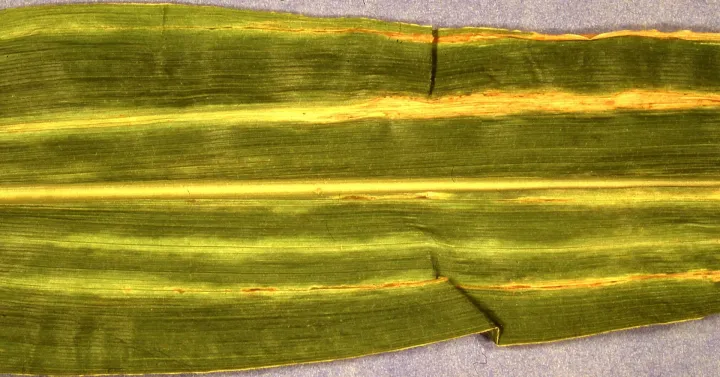
Initial symptoms are characterized by long, wavy-edged chlorotic streaks on leaves. These streaks follow the veins and eventually turn necrotic, causing the leaf tissue to wither and dry out.
Systemic infection often causes "wilt" symptoms, where the plant appears water-stressed despite sufficient soil moisture. Severely infected young plants may exhibit stunted development or abnormal side-shoot growth.
A diagnostic sign is the presence of a cloudy, sticky bacterial exudate leaking from the cut surfaces of stems or leaves. This exudate is rich in the polysaccharides produced by the bacteria.
In mature plants, the necrosis can spread rapidly, leading to premature plant death before the grain reaches physiological maturity. This results in poor kernel fill and weak stalks.
Discoloration of the vascular bundles, visible when the stalk is split longitudinally, is another characteristic sign of the infection caused by the clogging of the plant's hydraulic system.
Control measures
The most effective management strategy is the use of genetically resistant or tolerant corn hybrids. Breeding for resistance has significantly reduced the impact of Stewart’s wilt in commercial agriculture.
Controlling the corn flea beetle vector is vital. Applying systemic insecticidal seed treatments is the industry-standard practice to protect seedlings during the critical early growth stages.
Strict phytosanitary regulations and seed health testing are essential to prevent the movement of contaminated materials from regions where the pathogen is endemic to disease-free areas.
Cultural practices, such as controlling volunteer corn and weeds that act as alternate hosts, help disrupt the pathogen's life cycle and reduce the local beetle population.
Regular field scouting and monitoring for beetle populations allow farmers to make informed decisions regarding rescue insecticide applications to prevent large-scale outbreaks during the growing season.
Causes diseases · 1
Discussion
No discussions yet — be the first.