
Pantoea ananatis
Pantoea ananatis
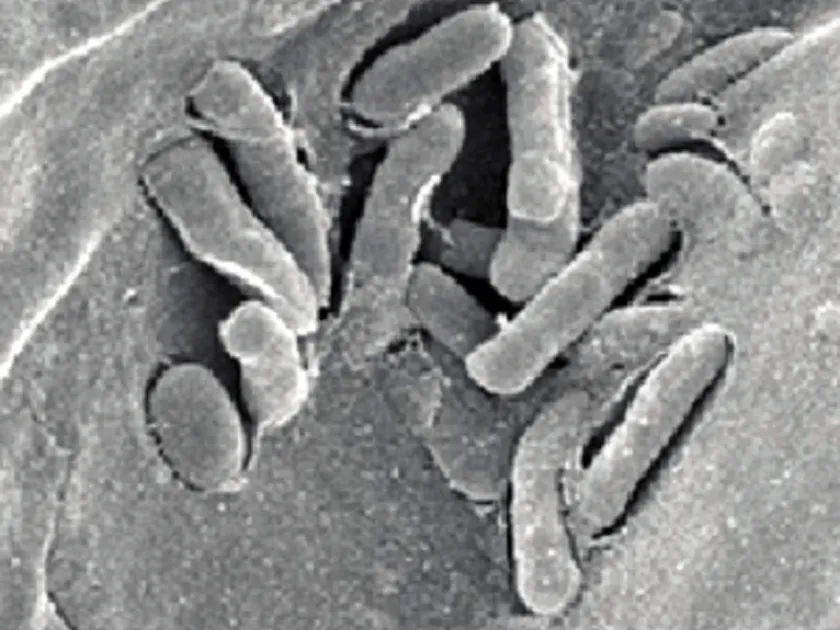
Description
How to identify
Pantoea ananatis is a Gram-negative, facultative anaerobic rod-shaped bacterium belonging to the family Erwiniaceae. It is recognized as an important phytopathogen with a wide host range.
The bacterium is known for its ability to exist both as an epiphyte on plant surfaces and as an endophyte, colonizing the internal tissues of its host plants without initially causing symptoms.
In laboratory conditions, it is characterized by the production of yellow-pigmented colonies on standard media. These carotenoid pigments serve as a protective mechanism against UV radiation.
Due to its high genetic diversity, P. ananatis has evolved several pathotypes that allow it to successfully infect a wide range of economically important monocot and dicot species.
The pathogen utilizes various mechanisms to overcome host defenses, including the production of specialized enzymes and the formation of biofilms, which enhance its survival on host surfaces.
What it damages
The economic impact of Pantoea ananatis is significant, as it affects diverse agricultural sectors including fruit, vegetable, and grain production worldwide.
In onions, the bacterium causes internal decay known as center rot or bulb rot, leading to substantial losses during both field growth and post-harvest storage.
In maize (corn) crops, it triggers bacterial leaf blight and stalk necrosis, causing physiological stress, reduced photosynthesis, and weakened stalks prone to lodging.
The pathogen also infects pineapple, rice, cantaloupe, and various solanaceous crops, causing a wide spectrum of symptoms ranging from leaf spots to systemic wilting.
Nursery and greenhouse productions are particularly vulnerable, as the pathogen can cause significant stand reduction and stunting in young transplants.
When it appears
The development of Pantoea ananatis is strongly favored by high relative humidity and warm temperatures, which promote bacterial colonization and tissue invasion.
The infection cycle often begins during periods of active plant growth, with bacteria entering through natural openings like stomata or via wounds created by insects or mechanical damage.
Insect activity, particularly that of thrips, plays a crucial role in the seasonal spread of the pathogen, as these insects act as efficient vectors for moving bacteria between host plants.
During the growing season, frequent rain events facilitate the dispersal of bacteria from infected to healthy plant tissues, often leading to rapid development of disease outbreaks.
In stored produce, the development of the disease is highly dependent on storage environment; poor ventilation and high condensation levels significantly accelerate the degradation of bulbs.
Signs of infestation
Initial infection symptoms often manifest as water-soaked lesions that eventually become necrotic, often surrounded by a chlorotic halo on leaves or stems.
Onions typically exhibit softening of the internal scales, followed by a pungent, foul-smelling rot that gradually spreads throughout the entire bulb.
Maize symptoms are characterized by longitudinal, tan or brown streaks on the leaves that may eventually merge, resulting in large areas of necrotic tissue.
- Development of bacterial exudates on infected tissue surfaces.
- Systemic wilting of the plant under high diurnal temperatures.
- Stunting and irregular growth patterns in young seedlings.
Severe infestations lead to premature senescence and death of the plant, which drastically reduces both the quality and total yield of the harvested crop.
Control measures
Management starts with the use of certified, disease-free seed and transplant material to prevent the introduction of the pathogen into new areas.
Cultural practices such as implementing long-term crop rotation are essential to reduce the buildup of bacterial inoculum in the soil over consecutive seasons.
Effective insect pest management, specifically targeting thrips, is critical to disrupt the transmission pathway of the bacterium and minimize secondary spread.
Sanitation measures, including the removal and destruction of crop debris after harvest, help limit the survival and overwintering of the pathogen in the field.
While chemical control using copper-based bactericides is sometimes applied for surface protection, their efficacy against systemic endophytic infections is generally limited.
Causes diseases · 1
Discussion
No discussions yet — be the first.