
Dickeya
Dickeya
Description
How to identify
Dickeya is a genus of Gram-negative, facultatively anaerobic bacteria belonging to the family Pectobacteriaceae. Formerly classified within the genus Erwinia, these pathogens have been reclassified based on advanced genomic analysis.
The hallmark of Dickeya species is their exceptional ability to secrete pectinase enzymes, which dissolve the middle lamella of plant cell walls, leading to rapid maceration of plant tissues.
These bacteria are motile, utilizing peritrichous flagella to navigate through the plant vascular system and intercellular spaces, allowing for systemic colonization of the host.
Identification often requires molecular methods, such as PCR or sequencing, as symptoms can be visually indistinguishable from those caused by Pectobacterium species.
Key species include Dickeya solani and Dickeya dianthicola, both of which are recognized as significant threats to potato production and ornamental plant cultivation globally.
What it damages
The primary economic impact of Dickeya is observed in potato crops, where it causes blackleg, stem rot, and soft rot of tubers, leading to substantial field and storage losses.
Vegetable crops such as tomatoes, onions, carrots, and peppers are also highly susceptible, often resulting in root rot or collapse of the entire plant structure.
Ornamental species like hyacinths, irises, and lilies suffer from bulb decay and floral stem rot, which can destroy high-value nursery stocks rapidly.
The pathogen is easily disseminated via contaminated soil, irrigation water, and infected plant debris, making long-distance spread through trade very common.
In addition to total crop loss, Dickeya contamination complicates international trade, as many regions enforce strict quarantine regulations to prevent the introduction of these aggressive bacteria.
When it appears
Dickeya thrives in environments characterized by high moisture and warm temperatures, with optimal growth occurring between 25°C and 30°C.
In temperate climates, the disease progress is most rapid during mid-to-late summer when canopy closure increases humidity and temperature within the plant stand.
Insects act as significant vectors, transferring bacterial cells from decayed plant parts to healthy tissues during feeding or movement.
Mechanical operations, including weeding, harvesting, and cultivation, create wounds on plants that serve as entry points for the bacteria to initiate infection.
The pathogen persists through winter in infected tubers, dormant bulbs, soil, and weed hosts, ensuring a continuous cycle of infection from one season to the next.
Signs of infestation
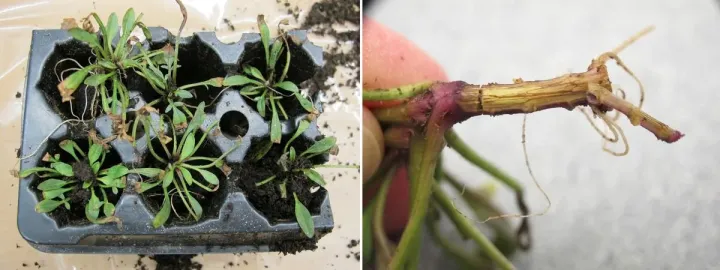
Early symptoms typically present as chlorosis (yellowing) and wilting of the foliage, even when soil moisture appears adequate for normal growth.
Stem tissues near the soil line become soft, mushy, and discolored, often turning dark brown or black as the vascular system is destroyed.
Tubers and fleshy roots exhibit deep, water-soaked lesions that progress into rapid liquefaction, often emitting a foul, putrid odor characteristic of soft rot.
Under high-humidity conditions, a visible bacterial ooze can emerge from the infected tissue, which serves as a highly contagious source of inoculum.
- Yellowing and wilting of upper leaves
- Dark, soft, and watery stem bases
- Putrid odor from rotting tubers or stems
- Rapid liquefaction of inner plant tissue
- Vascular discoloration visible upon cross-sectioning
Control measures
The cornerstone of managing Dickeya is the strict use of certified, disease-free seed potatoes and plant propagation materials.
Implementing rigorous crop rotation practices, avoiding susceptible crops for several years in the same soil, is essential for reducing the inoculum load.
Sanitation of agricultural equipment, tools, and storage facilities is critical, as the bacteria can survive on surfaces for extended periods if not properly disinfected.
Integrated pest management, including the control of insects and minimizing mechanical injury to plants, is vital to prevent bacterial transmission.
While chemical control with copper-based products may provide minor protection against secondary spread, there is no direct cure for a systemic Dickeya infection.
Causes diseases · 1
Discussion
No discussions yet — be the first.