
Banana bract mosaic
Banana bract
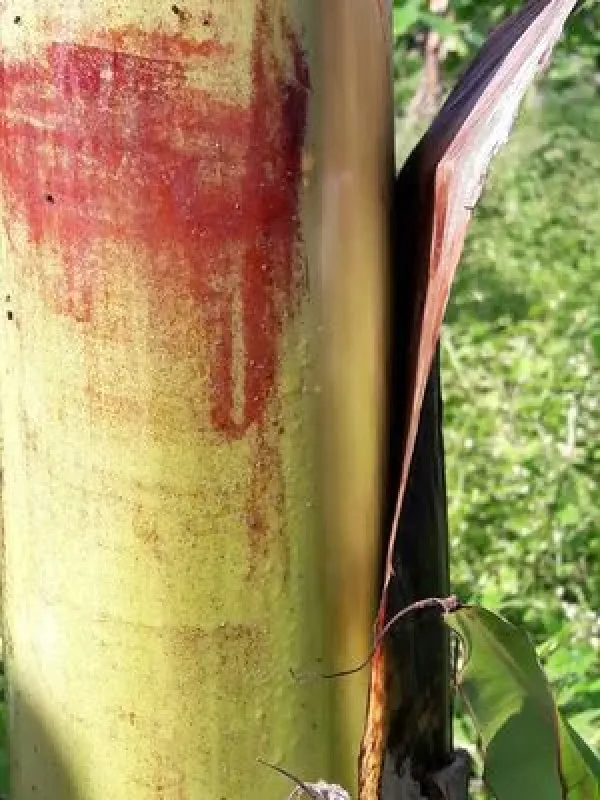
Description
How to identify
The causative agent of this disease is the Banana bract mosaic virus (BBrMV), a member of the Potyvirus genus within the Potyviridae family. It is a single-stranded RNA virus specifically targeting members of the Musaceae family.
Transmission occurs primarily through aphid vectors, most notably Pentalonia nigronervosa, which acquire the virus in a non-persistent manner. The virus can also be spread via infected planting suckers or contaminated cutting tools.
BBrMV is geographically widespread across South and Southeast Asia. The ease of spread via infected suckers makes international phytosanitary control critically important.
Inside the host plant, the virus replicates and forms characteristic cylindrical inclusions in the cytoplasm of infected cells, which are used for laboratory identification.
Accurate field identification is often difficult due to the transient nature of symptoms on vegetative parts, making molecular techniques like RT-PCR essential for confirmation.
What it damages
The virus affects both dessert and cooking bananas. Its primary impact is on the aesthetic and market value of the fruit, often rendering entire bunches unsuitable for export.
Banana bract mosaic virus induces significant reduction in bunch size and finger (fruit) weight, leading to substantial yield losses in affected plantations.
Systemic infection weakens the overall vigor of the banana plant, rendering it more susceptible to other biotic stresses and secondary pathogen invasions.
Fruit quality is severely degraded, characterized by distortion and internal necrosis, which prevents the produce from meeting consumer quality standards.
Long-term economic impact includes the necessity for total field eradication and replanting if the viral prevalence exceeds sustainable levels.
Signs of infestation
The most diagnostic feature is the appearance of mosaic patterns, streaks, or spindle-shaped patches of reddish-brown or purple color on the bracts of the inflorescence.
Symptoms on pseudostems and leaf petioles may manifest as spindle-shaped streaks. However, these symptoms are often elusive, leading to late diagnosis.
Infected fruits frequently show chlorotic streaks or mosaic patterns, and their shape is often distorted. The pulp may also show internal discoloration.
Flowering development is often stunted or incomplete, leading to poor bunch filling and potential total loss of the yield for the affected plant.
- Mosaic patterns on bracts
- Reddish-purple streaks on flower stalks
- Fruit deformation and chlorosis
- Stunted bunch development
- Pseudostem streaking
Control measures
The primary control measure is the use of virus-indexed, disease-free planting material sourced from certified in vitro propagation laboratories.
Vector management is crucial; maintaining low populations of Pentalonia nigronervosa through integrated pest management (IPM) helps slow the rate of viral spread within the field.
Strict sanitation protocols must be enforced, including the sterilization of all pruning and harvesting tools to prevent mechanical transmission of the virus between plants.
Early detection and immediate roguing (removal and destruction) of infected plants are essential to prevent the spread of the virus to neighboring healthy bananas.
Monitoring programs should be established to regularly inspect plantations for symptoms, allowing for prompt intervention before an outbreak becomes uncontrollable.
Causes diseases · 3
Discussion
No discussions yet — be the first.