
Description
Symptoms
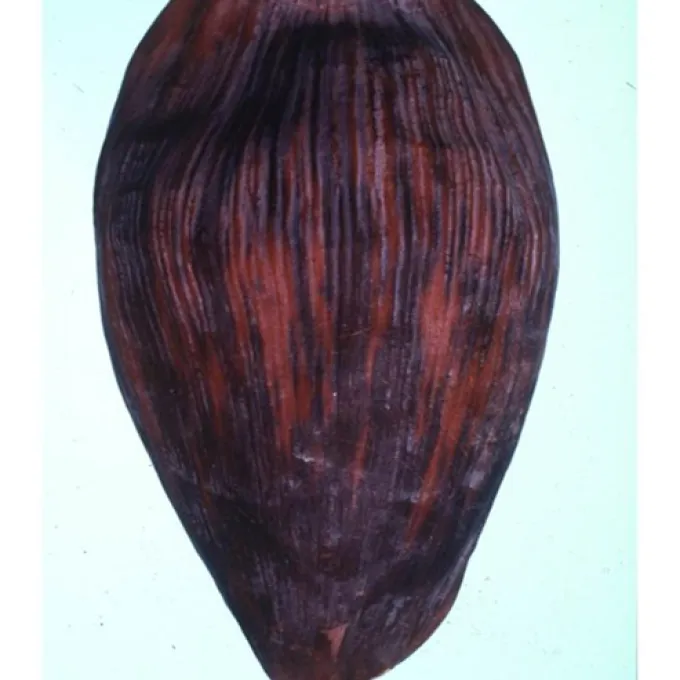
The main diagnostic feature of the disease is the appearance of characteristic mosaic patterns consisting of alternating light and dark areas on the bracts of the banana inflorescence.
In the early stages of infection, chlorotic streaks or specific spots may appear on the leaf blades, which are often confused with other viral infections.
As the disease progresses, the affected bracts lose their typical color, becoming pale with a pronounced yellowish or reddish-brown mottled appearance.
Fruits developing on infected plants often exhibit developmental anomalies, including shape distortion, uneven ripening, and a reduction in marketable weight.
In the late stages, general stunting of the entire plant is observed, along with slower leaf production and degradation of the root system, making the plant susceptible to secondary pathogens.
Pathogen
The causative agent of this disease is the Banana bract mosaic virus (BBrMV), which belongs to the genus Potyvirus.
The viral particle is a flexible filamentous structure containing single-stranded RNA, which possesses a high rate of replication within the host tissues.
Transmission of the virus in agroecosystems occurs mainly via sucking insect vectors, particularly various species of aphids (Aphididae), such as Pentalonia nigronerviosa.
The infectious agent can persist in the vegetative parts of the plant, making the use of infected planting material the primary route of spread to new areas.
The virus exclusively infects members of the banana family (Musaceae), demonstrating a high degree of specialization for species within the genus Musa.
Conditions for development
The spread of the virus occurs most intensively in warm tropical climates, which promote high activity of insect vectors.
The presence of weed vegetation in plantation alleys creates a favorable environment for the overwintering and multiplication of aphids, which directly correlates with the increase in epiphytotics.
Close spacing and high plant density facilitate the rapid movement of vectors from diseased plants to healthy ones.
The use of non-sterile tools during agricultural practices, such as pruning leaves or removing inflorescences, can lead to the mechanical transmission of the virus.
The lack of crop rotation and continuous cultivation of susceptible banana varieties on the same plots lead to the accumulation of a high inoculum background in the soil.
Why it matters
The damage caused by the virus consists of a significant reduction in yield, which in some cases can reach 40–50% of the potential total fruit harvest volume.
Damaged fruits lose their export quality due to changes in shape and appearance, making them unsuitable for sale in premium markets.
The quality of the banana pulp is reduced, negatively affecting taste characteristics and post-harvest storage life.
The disease necessitates the premature removal of entire plantations, leading to serious economic losses for producers.
The infection weakens the plant's immune system, making it more susceptible to other systemic diseases such as Fusarium wilt or bacterial rots.
Protection
The key prevention method is the use of exclusively healthy, certified planting material obtained through meristem tissue culture.
Regular monitoring of plantations for plants showing symptoms of chlorosis or bract deformation is necessary for their immediate isolation.
Controlling insect vectors (aphids) through systematic insecticide applications significantly reduces the rate of primary and secondary infection.
Adhering to strict hygiene rules when working with plants, including mandatory disinfection of garden tools after each plant, is critical.
- Removal and destruction of all infected plants from the site.
- Establishment of phytosanitary barriers around new plantings.
- Regular weeding of plants that serve as reservoirs for the virus.
Pathogens and affected parts
Affects crops · 1
Discussion
No discussions yet — be the first.