
Alfalfa enation
Alfalfa enation
Description
How to identify
Alfalfa enation (caused by the Alfalfa enation virus, AEV) is a systemic plant disease categorized as a viral infection. It primarily affects the vascular tissue, disrupting the transport of nutrients and hormones throughout the plant.
Taxonomically, this pathogen is an RNA virus. It relies entirely on the biological machinery of the host plant for replication, making it a challenging target for standard chemical crop protection products.
The transmission of this virus is strictly dependent on insect vectors, primarily aphids. These insects acquire the virus while feeding on infected tissue and transmit it to healthy alfalfa plants during subsequent feeding events.
Environmental conditions that favor the rapid reproduction of aphid populations also facilitate the spread of the virus across large agricultural fields.
The virus is capable of overwintering in the root systems of perennial alfalfa crops, ensuring that the field remains an inoculum source year after year.
What it damages
Alfalfa (Medicago sativa) is the primary host for this pathogen. While it may infect other legume species, the economic impact is most significant in alfalfa production fields.
The disease leads to a substantial reduction in green biomass production, which directly translates to lower hay yields for livestock farmers.
Nutritional quality is often degraded, as the virus negatively impacts the protein synthesis and nitrogen-fixing efficiency of the plant's root nodules.
Affected plants exhibit reduced vigor, making them significantly more susceptible to environmental stresses such as drought, extreme heat, or cold winter temperatures.
In seed production fields, the virus causes a decline in both the quantity and the viability of the harvested seeds, leading to economic losses for seed producers.
Signs of infestation
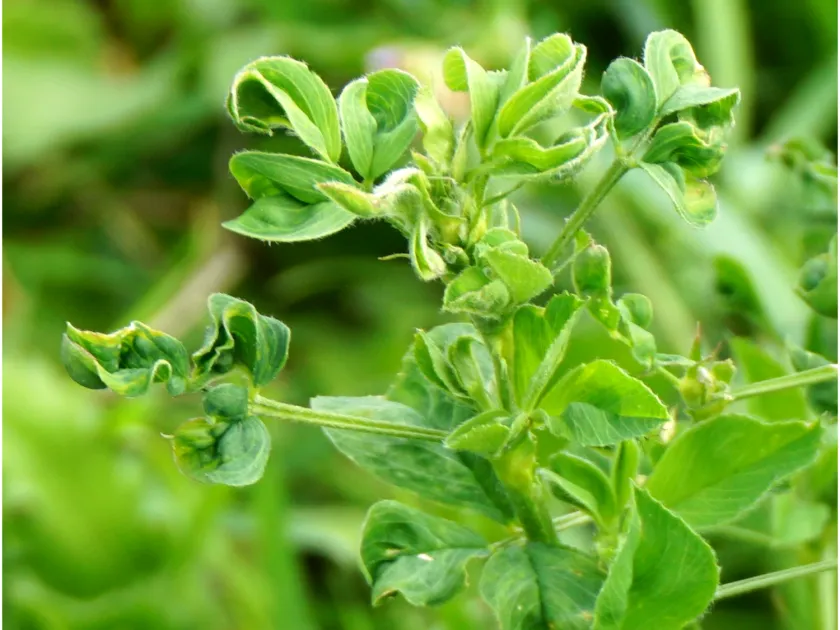
The hallmark symptom is the formation of enations—rib-like or ridge-like outgrowths on the underside of the leaf lamina, resulting from abnormal, rapid cell proliferation.
Leaves often appear stunted, curled, or distorted, frequently displaying chlorotic mottling or mosaic patterns that impair the plant's photosynthetic capacity.
Infected plants typically show severe stunting and shortened internodes, giving them a bushy or rosetted appearance that distinguishes them from healthy, upright plants.
- Rib-like enations on leaf undersides.
- Interveinal chlorosis and mosaic spotting.
- Severe stunting and dwarfing.
- Deformed and curled foliage.
A field-wide inspection will often reveal clusters of stunted, misshapen plants, particularly in areas where aphid infestation has been historically high.
Control measures
Management of Alfalfa enation centers on controlling the insect vector population. Regular scouting and timely insecticide applications during aphid outbreaks are essential to prevent viral spread.
Spatial isolation is a key cultural practice; new alfalfa plantings should be located at a significant distance from older, symptomatic fields that act as virus reservoirs.
Effective weed control is critical, as many common weeds in and around alfalfa fields can act as alternative hosts for both the virus and the insect vectors.
The utilization of certified, healthy seed and the selection of resistant cultivars are the most effective long-term strategies for minimizing disease incidence.
Integrated pest management (IPM) protocols should be followed to balance chemical control with the preservation of natural predators that help manage aphid populations naturally.
Causes diseases · 3
Discussion
No discussions yet — be the first.