
Description
Symptoms
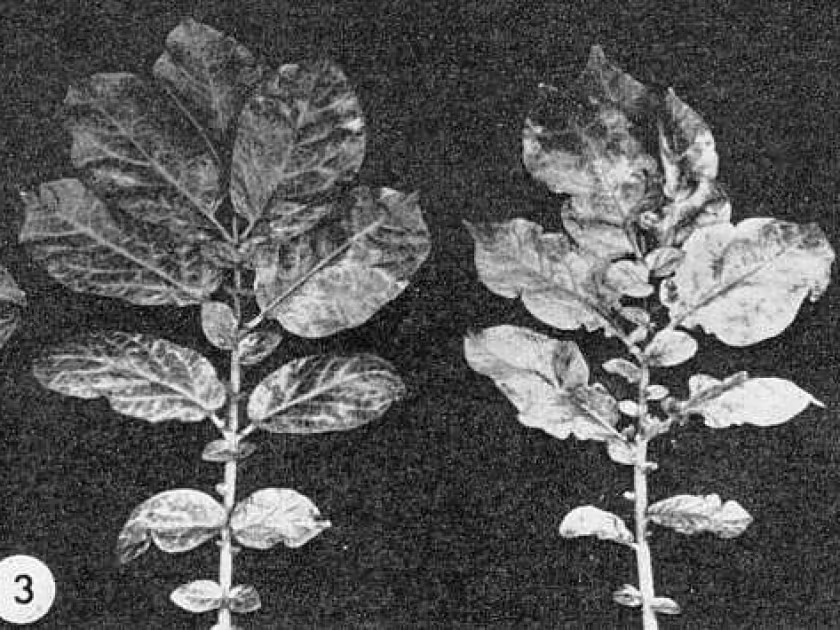
The primary external sign of the disease is the development of enations—specific outgrowth or ridge-like tissue formations on the underside of leaf blades.
Affected leaves often become deformed, curled, and display an atypical crinkled texture, which severely reduces the efficiency of the photosynthesis process.
Significant stunting occurs, with shortened internodes, causing the plant to adopt a low, compressed, and generally unthrifty growth habit.
Flowering in diseased specimens is either weak or completely absent, and any flowers that do form are often poorly developed and abscise prematurely.
In fields, the disease typically appears in patches which may eventually coalesce, potentially affecting large areas of the alfalfa stand.
Pathogen
The causative agent of the disease is the Alfalfa enation virus, which belongs to the group of plant pathogens specifically affecting leguminous species.
The virus is primarily transmitted by specific insect vectors, most notably various species of aphids that feed on the sap of infected plants.
Once introduced into the plant tissues, the virus spreads systemically through the phloem, inducing profound metabolic changes within the plant cells.
The pathogen can survive within the perennial root systems of infected alfalfa throughout the winter, providing an inoculum source for the following season.
The infection can also be harbored by various weed species, which serve as natural reservoirs for the virus during periods when the primary crop is absent.
Conditions for development
The spread of the virus is most intensive during periods of mass aphid migration, which typically coincides with warm and dry weather conditions.
High population densities of insect vectors within fields significantly increase the risk of rapid infection throughout the alfalfa crop.
Poor agricultural practices, such as failure to manage weed populations, create a favorable environment for the accumulation of the viral load.
Plants under stress from nutrient deficiencies or drought are significantly more susceptible to infection compared to healthy, vigorous stands.
Early planting dates or proximity to heavily infected perennial stands contribute to the accelerated dissemination of the pathogen.
Why it matters
Alfalfa enation causes substantial economic loss to growers due to a significant reduction in green matter and hay yield.
The nutritional quality of the forage is diminished, as infected plants accumulate fewer proteins and essential minerals required for livestock feed.
The productive lifespan of the alfalfa stand is shortened, frequently forcing farmers to plow down fields earlier than originally planned.
Decreased plant vitality renders the crop more susceptible to secondary infections, including fungal pathogens and root rot complexes.
Losses in seed production can reach devastating levels, often rendering seed-harvesting plots economically non-viable for farmers.
Protection
The primary control measure involves the use of certified, disease-free seed material and avoiding seed saving from infected fields.
Regular field scouting and appropriate insecticide applications to manage aphid populations during peak migration are essential for protection.
Effective weed control is critical, as many weeds act as intermediate hosts for the virus and refugia for the aphid vectors.
Implementing proper crop rotation and spatial isolation of new seedlings from older, highly infected stands significantly lowers infection risks.
The deployment of resistant or tolerant alfalfa cultivars remains the most effective long-term strategy for minimizing the impact of the disease.
Pathogens and affected parts
Affects crops · 1
Discussion
No discussions yet — be the first.