
White rust of sweet potato
Albugo ipomoeae-panduratae
Description
How to identify
The pathogen Albugo ipomoeae-panduratae belongs to the kingdom Chromista, phylum Oomycota, and the family Albuginaceae. It is an obligate parasite responsible for the disease known as white rust.
The mycelium of this organism grows intercellularly within the host tissue, utilizing haustoria to penetrate cell walls and extract nutrients. It is a fungus-like organism rather than a true fungus.
Reproduction occurs through the formation of sporangia, which accumulate under the plant epidermis. These sporangia are released when the epidermis ruptures, facilitating the spread of the pathogen.
The organism shows high host specificity, primarily targeting plants in the Convolvulaceae family. Distinguishing it from true rust fungi is essential for accurate diagnosis and treatment.
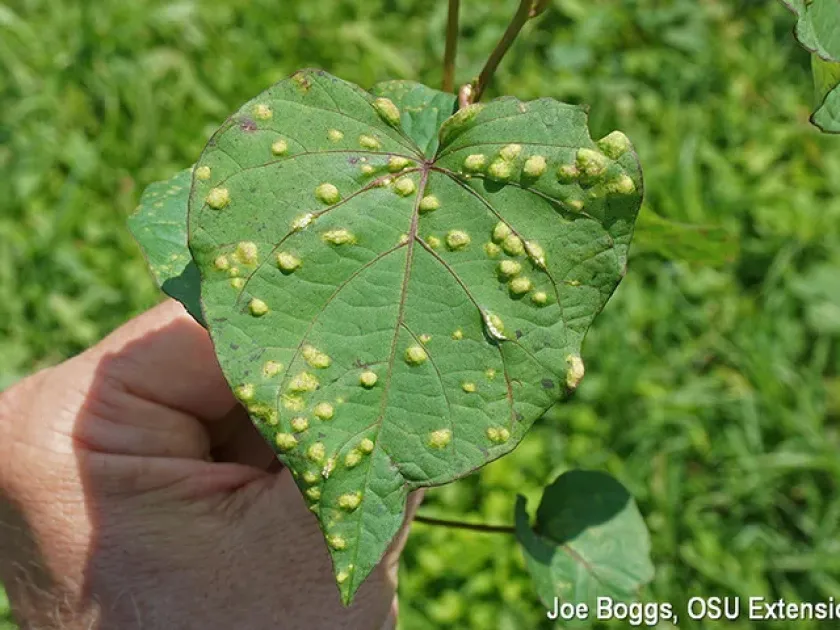
Laboratory identification involves microscopic examination of pustules to reveal the characteristic chains of sporangia. In the field, it is identified by white, blister-like pustules on the foliage.
What it damages
The primary host for this pathogen is the sweet potato (Ipomoea batatas). Infection significantly reduces photosynthetic capacity, which leads to lower yields of storage roots.
Infected leaves exhibit chlorosis and premature senescence. The loss of leaf area is critical, as it limits the plant's ability to accumulate starch in the tubers during the growing season.
Severe infections can cause distortion and necrosis of shoots and floral parts. This impacts both the vegetative growth and, in some cases, the production of seeds or cuttings for propagation.
The disease reduces the commercial value of the crop, as damaged leaves make the plants less vigorous and more susceptible to secondary infections from bacteria and other fungi.
In young plant nurseries, severe outbreaks can lead to significant stunting or mortality. This requires intensive management to ensure the viability of the planting material.
When it appears
The pathogen thrives under conditions of high relative humidity and moderate temperatures. Free water, such as dew or rain, is essential for the germination of sporangia on leaf surfaces.
Peak infection rates typically occur during the mid-season when the crop canopy is dense, which helps maintain high humidity levels at the leaf surface, creating a favorable microclimate.
Optimal temperatures for development range between +18°C and +24°C. While development slows at higher temperatures, the pathogen remains active throughout the warm growing season.
Oospores serve as the survival stage, overwintering in soil or infected plant debris. These spores initiate the cycle when conditions become favorable in the following growing season.
Sporangia are disseminated primarily by wind and water splashes. This mechanism allows the pathogen to spread rapidly across a field if environmental conditions remain conducive.
Signs of infestation
Early symptoms appear as chlorotic spots on the upper leaf surface. As the infection progresses, these spots enlarge, turn yellow, and may eventually become necrotic.
The hallmark sign of white rust is the appearance of white, creamy pustules on the lower leaf surface, directly beneath the chlorotic spots. These pustules represent the pathogen's sporulation.
When the pustules rupture, they release a white, powdery mass of spores. This material can be easily observed as a dusting on the leaves or falling onto surrounding vegetation.
Systemic infections may cause hypertrophy, resulting in swollen, twisted, or distorted stems and petioles. This indicates that the pathogen has successfully invaded the plant's vascular or structural tissues.
Leaf curling and death are common in late stages of infection. The necrotic patches gradually coalesce, leading to the collapse of the leaf and significant reduction in overall plant health.
Control measures
Crop rotation is the primary preventive measure, with a recommended gap of 3–4 years between sweet potato crops to break the pathogen's life cycle in the soil.
Sanitation is critical; all infected plant debris must be removed and destroyed after harvest. Deep plowing can also help incorporate residues, accelerating their decomposition and reducing inoculum.
Always use disease-free, certified planting material to prevent the introduction of the pathogen into new fields. Selecting resistant or tolerant cultivars is the most effective long-term strategy.
Chemical control involving copper-based fungicides or systemic anti-oomycete agents can be effective if applied early in the infection cycle. Regular monitoring is essential for timely application.
Cultural practices such as optimizing plant spacing and improving air circulation can significantly reduce the duration of leaf wetness, thereby inhibiting the development of the pathogen.
Causes diseases · 2
Discussion
No discussions yet — be the first.