
White rust of spinach
Albugo occidentalis
Description
How to identify
Albugo occidentalis is an obligate parasite classified within the kingdom Chromista, specifically in the class Oomycetes. Although historically associated with fungi, it is biologically more related to brown algae.
This pathogen is the specific causal agent of white rust on spinach (Spinacia oleracea). It lives entirely within the plant tissue, extracting nutrients through specialized structures called haustoria.
The organism reproduces by forming sporangia that erupt through the plant epidermis. These white pustules serve as the primary source of spread for the disease within the crop.
The life cycle includes both asexual stages (zoosporangia) and sexual stages (oospores). Oospores are highly resilient, allowing the pathogen to persist in the soil for several years.
This pathogen is highly host-specific, primarily affecting the Amaranthaceae family, with cultivated spinach being the most economically significant host.
What it damages
White rust is a major concern for spinach production globally. A severe infection can lead to complete loss of marketable yield, especially in humid and cool environments.
The disease affects all aerial parts of the plant. Damage manifests as physiological stress, reduced photosynthesis, and eventually tissue death in heavily infected areas.
As the pathogen colonizes the leaves, it causes chlorosis and structural deformation. This significantly reduces the quality of the greens, rendering them unsellable.
On spinach grown for seeds, the pathogen can infect flower stalks, leading to stunted growth, reduced seed set, and lower quality of the final seed stock.
In addition to direct yield loss, the infection can trigger secondary rot caused by opportunistic bacteria and fungi, which further degrade the plant material.
When it appears
Albugo occidentalis thrives in environments characterized by cool temperatures, typically between 15°C and 22°C, combined with high relative humidity or leaf wetness.
The pathogen initiates infection from oospores located in the soil. These spores are triggered to germinate by moisture, allowing them to infect the lower leaves of the host plant.
Secondary cycles occur rapidly when zoosporangia are released and spread via splashing water from rain or overhead irrigation. High moisture conditions are critical for this cycle.
Epidemics are most common during the spring and autumn months when cool, damp conditions prevail, providing the necessary window for infection and spread.
Poor field hygiene and dense planting density exacerbate the spread, as lack of air circulation keeps the leaves moist for longer periods during the day.
Signs of infestation
The primary symptom is the appearance of chlorotic, yellowing spots on the upper surface of the spinach leaf. As the infection progresses, these areas become necrotic.
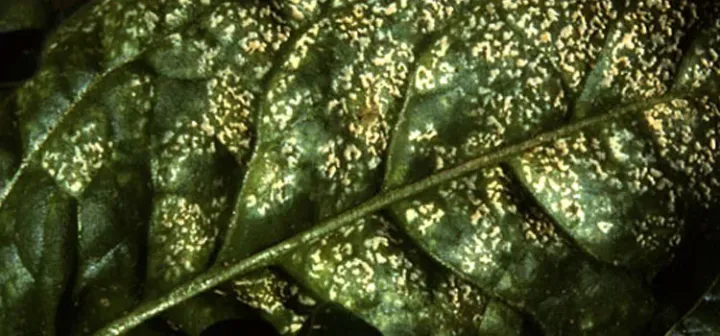
A distinctive diagnostic sign is the formation of white, raised pustules on the lower leaf surface. These pustules often look like small white blisters or bumps.
Eventually, these blisters rupture, releasing a powdery mass of white spores. This can lead to the wilting and curling of the affected leaf blades.
In heavily infested fields, plants may appear stunted, and leaves may show signs of severe chlorosis, eventually leading to premature senescence of the entire plant.
- Yellow chlorotic spots on the upper leaf surface.
- White, raised blister-like pustules on the underside of leaves.
- Deformed, curled, or distorted leaf shape.
- Tissue necrosis and eventual plant wilting.
Control measures
The use of resistant spinach cultivars is the most effective and sustainable method for managing white rust. Growers should prioritize varieties bred for disease resistance.
Implementing a proper crop rotation strategy is essential. A gap of at least 3 to 5 years between spinach crops is recommended to reduce the oospore population in the soil.
Sanitation practices, such as removing and destroying crop residues immediately after harvest, are crucial to prevent the carryover of the pathogen to the next season.
Switching from overhead irrigation to drip irrigation minimizes leaf wetness, effectively breaking the cycle of zoospore spread and significantly reducing disease pressure.
Chemical control involving fungicides can be effective if applied preventatively. However, strict adherence to pre-harvest intervals is mandatory due to the short growth cycle of spinach.
Causes diseases · 1
Discussion
No discussions yet — be the first.