
Albugo tragopogonis
Albugo tragopogonis
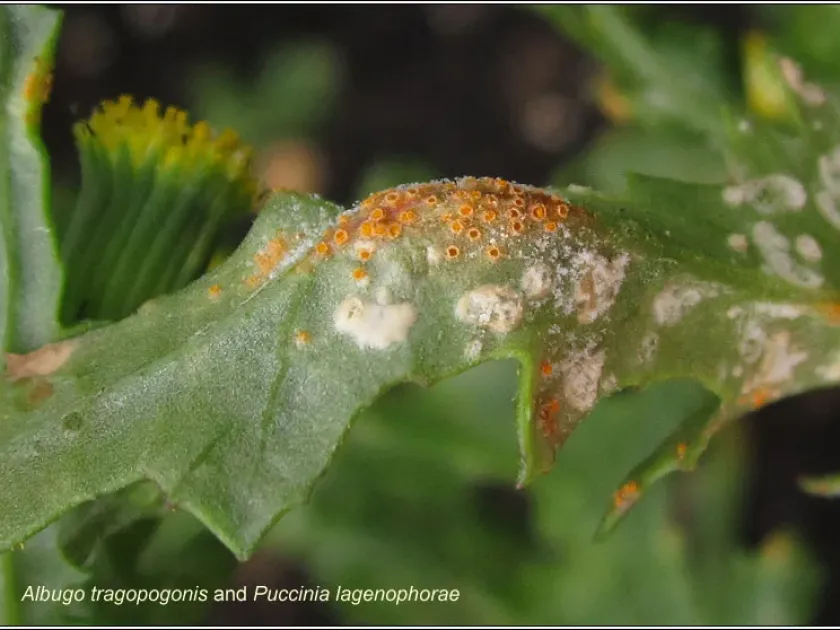
Description
How to identify
Albugo tragopogonis is an obligate parasite and a member of the class Oomycetes, causing the widely known plant disease referred to as "white rust".
The pathogen grows intercellularly within host tissues, utilizing specialized structures called haustoria to penetrate cell walls and absorb essential nutrients from the plant host.
Reproduction is primarily asexual, involving the formation of zoosporangia beneath the plant epidermis, which eventually rupture the tissue to release spores into the environment.
During unfavorable environmental conditions, the organism produces thick-walled oospores, which allow it to overwinter in soil and plant debris, remaining viable for several growing seasons.
It displays high host specificity, primarily infecting members of the Asteraceae family, including sunflowers, salsify, chicory, and various wild weeds that serve as reservoirs.
What it damages
The pathogen targets leaves, stems, and flower heads, causing significant physiological stress and hindering the normal developmental processes of the host plant.
Infected foliage undergoes chlorosis and necrosis, which drastically reduces the plant's photosynthetic capacity, leading to stunted growth and reduced biomass accumulation.
If the infection reaches the flower heads or stems, it can cause severe hypertrophy and deformation, resulting in poor seed set and lowered yield quality in oilseed crops like sunflowers.
Severe infestations weaken the plant's immune system, making it more susceptible to secondary infections by other opportunistic bacteria or fungi that thrive in damaged tissues.
The economic impact is primarily driven by yield reduction, decreased seed oil content, and the high costs associated with repeated fungicide applications during the vegetative stage.
Signs of infestation
The most characteristic sign is the appearance of small, raised, white or creamy-colored pustules on the abaxial leaf surface, which look like tiny blisters.
As the pathogen matures, these pustules rupture the host epidermis, revealing a white, powdery mass of zoosporangia that resembles a localized dust or crust.
On the adaxial surface of the leaves, chlorotic spots develop directly opposite the pustules, which may gradually turn yellow and necrotic as the infection progresses.
Stem infections often manifest as gall-like swelling, twisting, or bending, indicating systemic damage to the vascular tissues that interferes with the plant's water and nutrient transport.
High humidity and moderate temperatures significantly increase the visibility of symptoms, as these conditions favor rapid sporulation and the spread of the pathogen throughout the field.
Control measures
Effective control starts with strict crop rotation, ensuring that susceptible host plants are not grown on the same plot for at least three to four years to break the infection cycle.
Sanitation practices are essential, including the immediate removal and destruction of infected plants and the thorough deep plowing of crop residues to bury oospores.
Chemical intervention involving systemic fungicides, particularly those active against Oomycetes, should be implemented promptly upon the detection of initial disease symptoms.
Managing the field environment by optimizing plant spacing and improving air circulation can significantly reduce the humidity levels that the pathogen requires to proliferate.
Monitoring wild weed populations in surrounding areas is a critical proactive measure, as these act as primary sources of inoculum that can infect nearby commercial crop fields.
Causes diseases · 1
Discussion
No discussions yet — be the first.