
Aphanomyces raphani
Aphanomyces raphani
Description
How to identify
Aphanomyces raphani is a destructive oomycete pathogen known for causing black root disease in cruciferous vegetables. Unlike true fungi, this organism produces motile zoospores that require free water in the soil to navigate and infect new hosts.
The pathogen persists in the soil primarily through thick-walled oospores. These structures allow the pathogen to survive harsh conditions and remain dormant for several years, making the elimination of the disease from infested fields a significant challenge.
What it damages
This pathogen primarily infects members of the Brassicaceae family, including radish, daikon, turnip, and various types of mustard. The economic impact is significant as it can destroy both nursery seedlings and mature root crops.
The infection results in stunted growth and deformed root vegetables. In commercial production, fields with high levels of infestation may yield a total crop loss, as the vegetables become unmarketable due to severe decay and dark lesions.
When it appears
The development of the disease is highly favored by cool to moderate temperatures and high soil moisture levels. Periods of heavy rain or excessive irrigation create the ideal environment for the release and spread of zoospores.
The disease is most prevalent in poorly drained soils where water logging occurs. The incidence is usually higher in early spring or during wet autumn seasons, which are critical periods for the growth of radish and related crops.
Signs of infestation
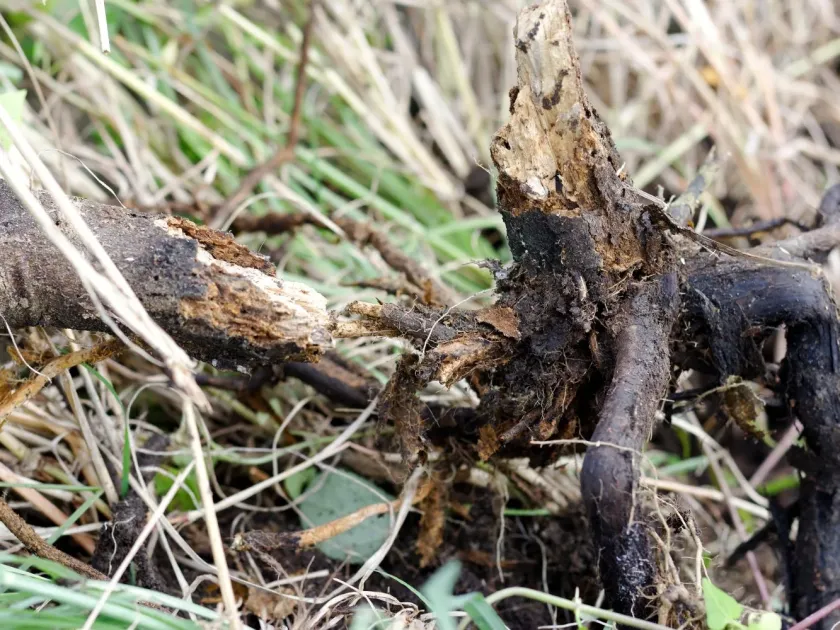
Initial symptoms on seedlings appear as water-soaked lesions on the hypocotyl, which eventually turn black, leading to damping-off. The collapse of the root tissue is the most recognizable symptom of the disease.
On older plants, signs include blackened, necrotic areas on the taproot. The lateral roots may be completely destroyed, causing the plant to wilt even under adequate watering conditions. Root distortion is frequently observed in infected plants.
Control measures
Management strategies emphasize cultural practices, including long crop rotations with non-host crops to starve the pathogen. Avoiding fields known to have drainage issues is essential to prevent the spread of zoospores.
- Implement proper soil drainage systems.
- Avoid over-irrigation of fields.
- Use resistant cultivars when available.
- Practice deep tillage to incorporate organic matter.
- Maintain balanced soil pH to promote plant health.
Causes diseases · 1
Discussion
No discussions yet — be the first.