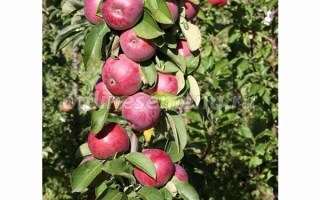
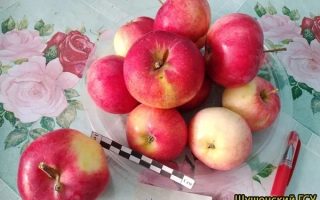
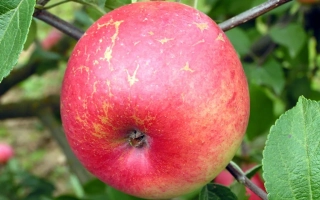
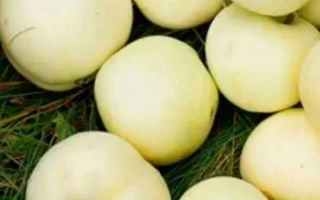
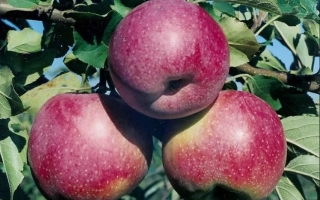
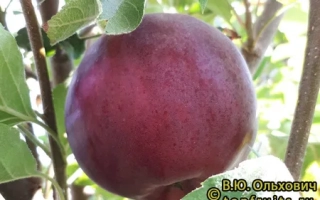
The Geneva Erly apple variety is a high-yield and early-maturing American selection, bred in 1967 at an experimental station in Geneva by crossing the Quinti and JulieRed varieties. The tree is of medium height, reaching 2.5-3.5 meters, with a widely oval, spreading canopy of medium density. Leaves are rich dark green, elongated in shape, and flowers are white, medium-sized. The variety is distinguished by winter hardiness, drought tolerance, and soil indifference, preferring sunny locations but capable of growing in shade. Pollinators are necessary for successful fruiting, such as varieties like Aidered, Celeste, Discovery, and Delicacy. Geneva Erly apples ripen at the end of July to early August, about 5-8 days earlier than the White Naliv variety. Apples are medium or large in size, weighing 150-200 grams, round or flat-round in shape, with yellow-green skin and a beautiful red-pink blush on the sun side. The skin is thin but dense and shiny. The flesh is white with a cream tint, dense, juicy, and crisp, with an amazing aroma and a sweet-sour taste with spicy sweet-wine notes. The fruits ripen unevenly, which allows harvesting the crop over several weeks. Apples are stored in the refrigerator for about three weeks. The variety is characterized by high early fruiting – the first fruits can be obtained as early as the second year after planting, and the yield of an adult tree reaches about 50 kg per year. Apples are widely used fresh and for making jams, compotes, juices, sorbets, jams, apricot preserves, jellies, and mousses due to their high pectin content. They are also suitable for drying and dietary nutrition, recommended for metabolic disorders. The main threat to the tree is scab, so preventive spraying is recommended to protect the crop.