


SKU #73582
·
79 views
Yalita
Jujube
User rating
0 votes0% positive reviews
No ratings yet — be the first.
Exotic Cultures
Unabi
Flavor
Sour-sweet
Fruit Shape
Cylindrical
Fruit Color
Brown
About product

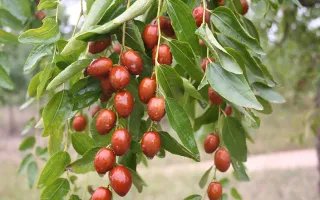
Yalita Jujube – this is a variety of Chinese date (jujube) grown as a decorative and medicinal plant. The tree reaches a height of 2 to 4 meters, has a dense vertical crown, dark gray bark, and straight reddish-brown shoots. The leaves are large, ovoid, glossy, with a rounded base and a pointed tip; their edges are slightly serrated. The fruits are large, elongated, brown, with a thin smooth skin…
Exotic Cultures
Unabi
Flavor
Sour-sweet
Fruit Shape
Cylindrical
Fruit Color
Brown
Description
Yalita Jujube – this is a variety of Chinese date (jujube) grown as a decorative and medicinal plant. The tree reaches a height of 2 to 4 meters, has a dense vertical crown, dark gray bark, and straight reddish-brown shoots. The leaves are large, ovoid, glossy, with a rounded base and a pointed tip; their edges are slightly serrated. The fruits are large, elongated, brown, with a thin smooth skin and white-yellow firm flesh. In fresh form, they have a sweet-and-sour taste, while in dried or pickled form they retain aroma and beneficial properties.
Yalita fruits are rich in vitamins C, A, E, minerals (potassium, phosphorus, iron, calcium), and pectin. Their sugar content reaches 27%, acidity about 1%. Thanks to these components, the jujube has a beneficial effect on the cardiovascular system, digestion, immunity, and cognitive functions. The plant is drought and heat resistant and also withstands moderate frosts (up to -12 °C without damage), making it suitable for growing in various climatic zones.
Yalita jujube is widely used both in food and in medical practice. Fruits can be eaten raw, dried, frozen, boiled into jam or compote, used to make drinks and teas. Pickled fruits give dishes a sweet-and-sour taste and preserve nutrients. In traditional medicine, jujube is used to treat respiratory diseases, hypertension, anemia, atherosclerosis, as well as as a means of supporting the liver and kidneys. With proper care - regular summer watering, winter protection from cold, and moderate pruning - the tree ensures high yield and decorative appeal.
Yalita fruits are rich in vitamins C, A, E, minerals (potassium, phosphorus, iron, calcium), and pectin. Their sugar content reaches 27%, acidity about 1%. Thanks to these components, the jujube has a beneficial effect on the cardiovascular system, digestion, immunity, and cognitive functions. The plant is drought and heat resistant and also withstands moderate frosts (up to -12 °C without damage), making it suitable for growing in various climatic zones.
Yalita jujube is widely used both in food and in medical practice. Fruits can be eaten raw, dried, frozen, boiled into jam or compote, used to make drinks and teas. Pickled fruits give dishes a sweet-and-sour taste and preserve nutrients. In traditional medicine, jujube is used to treat respiratory diseases, hypertension, anemia, atherosclerosis, as well as as a means of supporting the liver and kidneys. With proper care - regular summer watering, winter protection from cold, and moderate pruning - the tree ensures high yield and decorative appeal.
Specifications hover over for a hint about the specification
| Exotic Cultures | |
|---|---|
| Flavor | |
|
Fruit Shape
Fruit Shape
Modern tomato varieties have a diverse fruit shape: flat, flat-round, round, oval, elongated-oval, pear-shaped, plum-shaped, cube-shaped, and cylindrical. On poorly fertile soils and under unfavorable growing conditions, tomato fruits may take on a more rounded shape. |
|
|
Fruit Color
Fruit Color
The fruit color of tomato varieties is influenced by the combination of skin and flesh color. Some varieties have transparent skin, others — yellow. When combined differently, the fruits can acquire quite diverse colors. The fruit color is affected by pigments (lycopene) and thei... |
|
| Registration year | 2019 |
| Catalog | Catalog → Jujube |
| Legal data |
Show · 7
|
| Country | Russia |
Store offers
Prices are updated on loadLoading offers…
Aggregator catalog: prices are collected automatically from store websites, normalized by AI and converted at the current exchange rate. Before ordering, confirm the price and availability on the store's website. This block is not indexed by search engines — the data is loaded after the page opens.
Not yet комментариев. Be the first!


See also
Often considered together with this variety





Recently viewed
Products you’ve viewed on this site
Reviews · 0