


SKU #73584
·
79 views
SINIT
Jujube
User rating
0 votes0% positive reviews
No ratings yet — be the first.
Exotic Cultures
Unabi
Fruit Weight
5-8
Flavor
Sour-sweet
Fruit Shape
Cylindrical
Prices in stores
from3.45 €per plant
pack from 3.54 € per 1 pcs
4 offers from 3 stores
Store offers · 4 from 3 stores
Prices are updated on loadLoading offers…
Available at: AgronomVIP · Kustik · Rassadnik
Aggregator catalog: prices are collected automatically from store websites, normalized by AI and converted at the current exchange rate. Before ordering, confirm the price and availability on the store's website. This block is not indexed by search engines — the data is loaded after the page opens.
About product

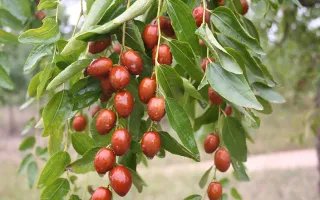
A high-yielding jujube cultivar with elongated fruits weighing up to 8 grams and a balanced sweet-and-sour flavor.
Exotic Cultures
Unabi
Fruit Weight
5-8
Flavor
Sour-sweet
Fruit Shape
Cylindrical
Description
Technological Potential of the 'Sinit' Cultivar
A breeding product of the Nikitsky Botanical Gardens (NBS-NNTS RAS), the 'Sinit' jujube (Unabi) cultivar is the result of systematic efforts to adapt exotic species to temperate and subtropical climate zones. Technically, it is a mid-season cultivar designed for consistent yield with high transportability and marketability metrics.
Fruit Morphology and Biochemical Profile
The primary advantage of 'Sinit' lies in its physical fruit structure, which dictates durability and shelf life:
- Geometry: The fruits have a distinct elongated shape, which facilitates automated sorting and packaging processes.
- Mass and Dimensions: The average weight ranges from 5 to 8 grams, providing an optimal balance between maturation rates and solids accumulation.
- Coloration: The deep brown skin indicates a high concentration of anthocyanins and flavonoids.
- Flavor Profile: The sweet-and-sour profile is achieved through a high organic acid content combined with sufficient sugar levels, making this cultivar ideal for both fresh consumption and processing.
The cultivar was developed under the guidance of breeders N. G. Chemarin and L. T. Sinko. The genetic makeup of 'Sinit' emphasizes resilience against environmental stressors, ensuring stable fruiting even under fluctuating temperature conditions. For commercial growers, this translates into minimized crop loss risks when cultivating exotic fruits in industrial orchard zones.
The legal rights to the cultivar are held by the Nikitsky Botanical Gardens – National Scientific Center of the RAS. This ensures the purity of the planting material and adherence to specified varietal standards provided that agronomic protocols are followed.
Specifications hover over for a hint about the specification
| Exotic Cultures | |
|---|---|
|
Fruit Weight
Fruit Weight
Tomato fruits are classified by weight as: very small — less than 20 grams; small — 20 — 50 grams; medium — 50 — 100 grams; large — 100 — 200 grams; very large — more than 200 grams. |
5-8 |
| Flavor | |
|
Fruit Shape
Fruit Shape
Modern tomato varieties have a diverse fruit shape: flat, flat-round, round, oval, elongated-oval, pear-shaped, plum-shaped, cube-shaped, and cylindrical. On poorly fertile soils and under unfavorable growing conditions, tomato fruits may take on a more rounded shape. |
|
|
Fruit Color
Fruit Color
The fruit color of tomato varieties is influenced by the combination of skin and flesh color. Some varieties have transparent skin, others — yellow. When combined differently, the fruits can acquire quite diverse colors. The fruit color is affected by pigments (lycopene) and thei... |
|
| Registration year | 2014 |
| Catalog | Catalog → Jujube |
| Legal data |
Show · 7
|
| Country | Russia |
Not yet комментариев. Be the first!


See also
Often considered together with this variety


Recently viewed
Products you’ve viewed on this site
Reviews · 0