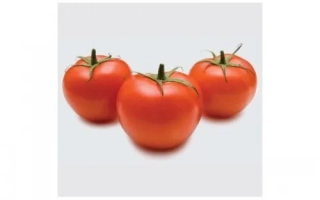
Tomato Cherokee F1 is an early indeterminate hybrid developed by the Italian company Esasem, primarily intended for cultivation in greenhouses, although it can also be successfully grown outdoors in warm regions. The plant is vigorous, reaching a height of 1.2 to 2 meters, and requires staking and training to two stems. Cherokee F1 is characterized by high resilience and the ability to continue growth and fruiting even under stressful conditions, including hot weather. To achieve maximum yield, regular application of organic and mineral fertilizers, as well as pest protection, is recommended. The bushes have good foliage density and short internodes, which promotes uniform and rapid fruit ripening.
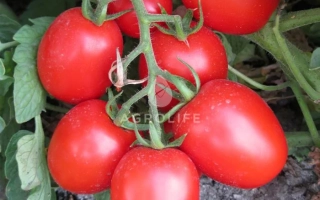
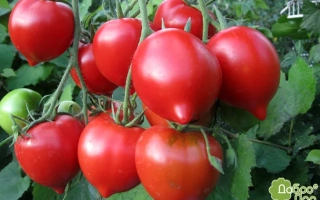
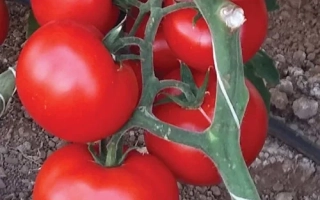
The fruits of tomato Cherokee F1 are large, round with a slight flatness and pronounced ribbing at the stem attachment, weighing from 160 to 200 grams. They have a rich red color, dense structure with numerous chambers, and high juiciness. The taste is well-balanced, with a predominance of sweetness and a mild acidity, making them ideal for fresh consumption, salad preparation, dish garnishing, as well as for making juices and sauces. The fruits have excellent transportability and storability, ensuring prolonged storage without loss of freshness.
The variety demonstrates high resistance to a range of diseases, including fusarium and verticillium wilt, tomato mosaic virus, and nematodes, significantly simplifying care and reducing the risk of yield loss. Cherokee F1 is recommended for cultivation in glass and film greenhouses during the autumn-winter period, with an optimal planting density of 2.5–3 plants per square meter. Due to its characteristics and qualities, this tomato is an excellent choice for farmers and enthusiasts seeking a stable and flavorful harvest.