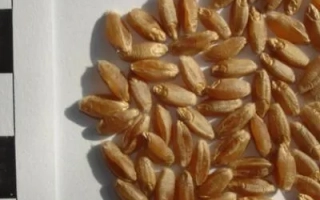
Timothy is a perennial grass with a loosely-culmed structure and a fibrous root system, mainly located in the upper soil layers (30–50 cm). The culms are erect, 100–120 cm tall, with delicate, grayish-green, rough leaves. The inflorescences are cylindrical; the seeds are ovoid, 1.5–2 mm long and 0.5–1 mm wide, with a grayish-silver color. One kilogram contains about 2,300 thousand seeds, and the weight of 1,000 seeds is approximately 0.42 g.
Timothy has high forage value: in 100 kg of green mass of the grass, there are 21–25 feed units, in hay – 3–5 kg of digestible protein and 49–50 feed units. Leaves make up 50–65% of the total grass mass. Yield ranges from 60 to 100 centners per hectare. The crop develops quickly in spring but is considered late-maturing; in pastures, it can remain for six years or more, recovering well after grazing and mowing.
Timothy is characterized by high frost hardiness and good adaptation to moderately moist soils. It prefers clayey, moist soils, but can grow on sandy soils if they are not too dry. The crop withstands flooding for up to 30 days, poorly responds to prolonged drought and shading. Vegetative growth begins at 5–6 °C, and seed germination – at 1–2 °C. For maximum productivity, mowing is recommended at the end of heading before flowering; when used on pastures, 3–4 cuts per year are possible, and on hay meadows – two cuts.
Timothy is widely used as fodder for cattle and horses, as well as in seed mixtures for lawns. The sowing rate is 10–12 kg/ha (or 100–120 g/centner) for pure sowing; when mixed cultivation with legumes, the rate decreases to 7–10 kg/ha. After mowing, phosphorus and potassium fertilizers can be applied to improve winter hardiness, but nitrogen fertilizers are not required.