


SKU #74687
·
61 views
Nasoloda
Viburnum
User rating
0 votes0% positive reviews
No ratings yet — be the first.
Decorative Plants
Viburnum
Berry flavor
Bitter-sweet
Berry Color
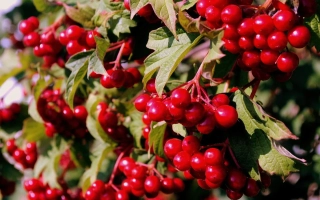
Bright Red
Assignment
For Fresh Consumption, Recycling, Medicinal
About product

A Ukrainian cultivar with refined flavor profiles, combining high ornamental value with excellent nutritional density.
Decorative Plants
Viburnum
Berry flavor
Bitter-sweet
Berry Color
Bright Red
Assignment
For Fresh Consumption, Recycling, Medicinal
Description
Breeding Profile and Genetic Foundation
The 'Nasoloda' variety represents the culmination of selective breeding conducted by the M.M. Gryshko National Botanical Garden of the NAS of Ukraine. The primary objective of this selection program was to refine the Viburnum opulus species to suit home garden conditions while mitigating the intense bitterness characteristic of wild specimens. The result is a specialized cultivar that maintains high nutrient density while improving sensory profiles for consumer markets.
Morphology and Functional Use
- Fruit characteristics: The berries are deep, bright red with uniform development. The flavor profile is defined as bittersweet; the reduction in bitterness compared to typical wild viburnum allows these berries to be consumed fresh, particularly after the first frost, which naturally stabilizes the volatile compounds.
- Versatility: The structural composition of the berry makes it ideal for triple-purpose usage: direct consumption, commercial processing (juices, preserves), and pharmacological extraction for medicinal use.
- Ornamental integration: Beyond its yield potential, 'Nasoloda' serves as a high-value landscape element. Its density and predictable growth pattern make it a preferred choice for ornamental shrub planting in temperate climates.
Agronomic Performance
From an agricultural standpoint, 'Nasoloda' is recognized for its high level of adaptability to Ukrainian pedoclimatic conditions. The selection process prioritized resistance to indigenous pathogens and environmental resilience. For both amateur and commercial growers, the key advantage lies in its dual-purpose nature: the variety functions equally well as a structural element in garden design and as a consistent source of functional food products.
Crop & resistance
Crop
Specifications
| Decorative Plants | |
|---|---|
| Berry flavor | |
| Berry Color | |
| Assignment | |
| Registration year | 2016 |
| Catalog | Catalog → Viburnum |
| Legal data |
Show · 1
|
| Country | Ukraine |
Store offers
Prices are updated on loadLoading offers…
Aggregator catalog: prices are collected automatically from store websites, normalized by AI and converted at the current exchange rate. Before ordering, confirm the price and availability on the store's website. This block is not indexed by search engines — the data is loaded after the page opens.
Not yet комментариев. Be the first!



See also
Often considered together with this variety




Recently viewed
Products you’ve viewed on this site
Reviews · 0