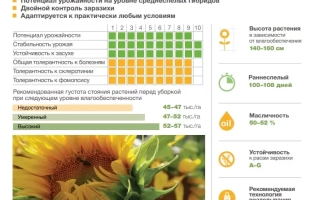
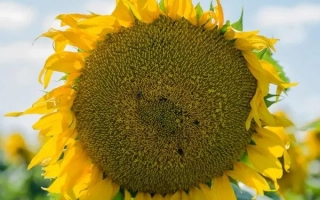
Sangay sunflower is a high-yielding, mid-season hybrid with a vegetation period of 112-114 days, intended for cultivation in the forest-steppe and steppe zones of Ukraine. This simple hybrid is characterized by vigorous growth and a well-developed root system, contributing to its high productivity. Plants reach a height of 160-180 cm, have a thin, convex head with a diameter of 22-25 cm, and black, elongated seeds with large size and a 1000-seed mass of 67-73 g. The potential yield is up to 58 centners per hectare, and the oil content of the seeds ranges from 50-55%, making Sangay an excellent choice for oilseed production. The Sangay hybrid exhibits high resistance to various stress factors and diseases. It demonstrates very high drought, lodging, and shattering resistance, as well as high tolerance to powdery mildew, fomopsis, and fomosis. A special advantage of this sunflower is its resistance to seedborne pathogens of seven races (A-G), which significantly reduces the risk of yield loss. This comprehensive protection allows the hybrid to maintain stable and high-quality production even under unfavorable growing conditions. For successful cultivation of Sangay sunflower, it is recommended to select well-lit, fertile, and well-drained areas. Sowing is typically carried out in spring at optimal soil temperatures for seed germination. Proper agronomy, including soil preparation, plant nutrition, and protection against pests and diseases, is crucial. Thanks to its high yield, oil content, and disease resistance, Sangay is a profitable and reliable choice for agricultural producers aiming for maximum efficiency in sunflower oil production.