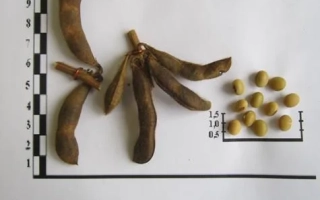
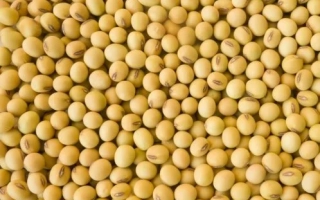
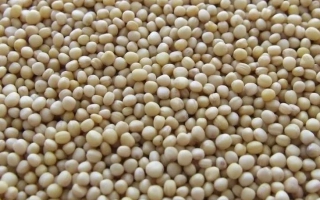
TAIFUN is a soybean (Glycine max (L.) Merr.) variety of early maturity type, recommended for cultivation in various regions of Russia, including the Krasnodar, Stavropol, and Primorsky regions. The plants reach an average height of about 73.2 cm, and the mass of 1000 seeds is approximately 151.8 g. The average seed yield varies by region, being about 18.1 centners/hectare in the North Caucasian region and 21.3 centners/hectare in the Far Eastern region. The seeds are characterized by a high protein content of 36.8% and fat content of 23.2%, which makes this variety attractive for agricultural production and processing.
To increase yield and improve seed material quality, it is recommended to use a modern inoculant for treating soybean seeds containing Bradyrhizobium japonicum strains. This preparation promotes active development of tubercle bacteria, significantly increasing the level of nitrogen fixation in the soil and reducing the need for mineral nitrogen fertilizers. The inoculant also contains macro- and micronutrients, amino acids, vitamins, plant hormones (auxins, cytokinins, gibberellins), polysaccharides, and organic acids, which contribute to improved plant growth energy and enhance their resistance to stress conditions.
Seed treatment with the preparation is carried out at a dosage of 2–3 kg per ton of seeds directly on the day of sowing or the day before. After treatment, seeds must be stored in a dark and cool place to maintain bacterial culture activity. This approach ensures effective use of soil natural resources, contributes to fertilizer savings, and improves the overall productivity of soybean crops of the TAIFUN variety.