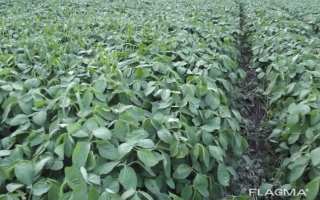
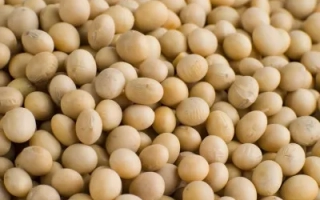
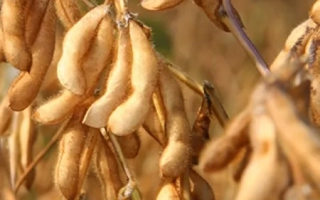
Soybean variety Chamomile is a medium-maturing elite culture with a vegetation period of 3 to 3.5 months. When sown in mid-April and under favorable growing conditions, harvest can be obtained as early as the first decade of September, reaching yields of 40 to 45 centners of grain per hectare. The 1000-seed weight is 165–167.5 grams. Chamomile is recommended for grain production as a food crop, and also has universal grain-feed purposes. The variety is included in the State Register of Plant Varieties of Ukraine since 2013 and is suitable for cultivation in steppe, forest-steppe, and Polissia zones. Plants of the Chamomile variety have a height of 82 to 98 cm, indeterminate growth type, and semi-dense bushes. Leaves are egg-shaped with a slightly elongated form, flowers are purple, pods are light-brown, round in shape, with 3–4 per pod. Lower pods are firmly attached, which contributes to resistance against lodging. The recommended seeding rate is 550–600 thousand seeds per hectare. Soybean Chamomile demonstrates high resistance to drought, lodging, and pod cracking, which increases yield reliability. The variety is resistant to most diseases and pests, including septoria, bacterial blight, stem rot, and viral mosaic. The RR-2 index indicates resistance to the broad-spectrum herbicide RoundupReady. Technological characteristics of the variety include protein content at 40% and fat content of 20–22%, making it valuable for both food and feed applications. High yield of the variety reaches 3.1–3.6 tons per hectare, confirming its efficiency and economic attractiveness for agricultural production.